My IH Journal column no.2: learner autonomy and metacognition

My IH Journal (International House Journal) tagline is as follows:

“To celebrate my 30th birthday (18/06/2013), I made an attempt to identify 30 things that I’d incorporated into my professional practice over the preceding year. 30 is quite a large number, but having spent an academic year at Leeds Metropolitan University learning vast amounts while tackling the Delta integrated into an M.A. ELT, I thought I should be able to pinpoint any number of things and by doing so, it would reinforce them in my mind as well has creating a record to look back on. Despite the final length of that blog post, each of the 30 items was only briefly treated. In this column, I revisit that blog post, selecting items and expanding on them.”

For my second column, which recently appeared in issue 36 (Spring 2014), I focused on learner autonomy and metacognition. As I get lots of searches relating to metacognition leading to my blog, I thought I would post a link to this column for any who are interested in this area and that of learner autonomy.

The contents page shows the wide variety of articles and columns that IH Journal has to offer – something for everybody to read, so why not have a look?

Enjoy! 🙂

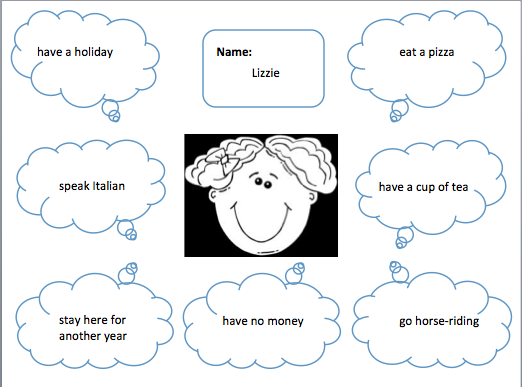
Review board-game for advanced level learners

I used this simple board game that I made, with my advanced level learners, to do some post-progress test review with them. It worked well, so I thought I would share it here for anybody else who might like to use it. It took an hour for three learners (my 50% attendance rate for today’s class!) to play the game together.

It covers the following areas:

  • Compound nouns from phrasal verbs
  • Language for adding emphasis
  • Inversion
  • Passive distancing
  • Responding to news

It is based on Units 5 + 6 of New Headway Advanced 

Instructions:

  • Put learners in groups of three.
  • Each learner needs a coin/counter and one coin is needed for use by all – to determine the number of squares a player should move forward.
  • All learners should put their coins on square 1 – “Go!
  • Tell learners to take it in turns to toss the central coin. If it lands with the “heads” side facing up, then they should move forward one space. If it lands with the “tails” side facing up, then they should move forward two spaces. If a square has already been landed on and the question answered correctly, that square becomes a “dead” square. Exceptions to this are those squares which require creativity! 🙂 In the case of a “dead” square, the learner would move to the next “live square” beyond it.
  • Each time they land on a square, they must follow the instructions in that square. If they answer incorrectly, they must go back to the square they were in prior to tossing the coin.
  • For the squares that require learners to take a longer speaking turn, to discuss a topic/tell a story, monitor and collect feedback to do a delayed feedback phase with the class at the end of the game.
  • For the other squares, monitor and settle any disputes that may arise!

Have fun! 🙂

Innovation in education: looking for learning (British Council Associate blog post 3)

For my third blog post as a British Council Associate, I chose the topic of innovation in education.

This was the brief:

As learning technologies become more and more ubiquitous in our teaching, how can we ensure that pedagogy is at the centre of what we do to increase learning? What tools do you incorporate into your teaching and how do you ensure they help learning?

I shared the approach I use to ensure that the tools I use help learning, and to ensure that pedagogy remains central, using Edmodo and Wordandphrase.info as examples.

To read my blog post, please follow this link.

To see other blog posts I’ve written for the British Council, please follow this link. (Topics so far are: “Course books in the classroom: friend or foe?” and “How does blogging help you to be a better teacher?”)

Thank you, British Council Teaching English, for letting me post alongside some really great bloggers.

IATEFL 2014 – Graham Hall: How to get published in an academic journal like ELTJ

Have just found my notes from this interesting “how to” talk which took place on Thursday morning before the plenary…

An academic journal is a peer reviewed journal.

What makes academic journals different from a newsletter or magazine?

  • It has an editor, makes decisions on what goes in, but the key thing is that the editor has people to help assess the content of articles i.e. peer reviewed
  • There’s a system of peer review: Articles are judged by the authors peers, evaluated on, fed back to editor, who takes action. (Our peers are people in the field)

The key thing to take from this talk is that not all journals are the same! I.e. different journals have different aims/objectives/readerships. Readerships have different expectations.

If you have an idea for an article, if you want to submit to e.g. ELTJ, the editor will have different expectations from Journal x – so submit your article to the journal you write it for, not another. Be familiar with who you are writing for. (I.e. read said journal!)

Why write for an academic journal?

  • As an individual, we might write for an academic journal for professional development reasons.

There are numerous strands to this.

First strand: we are sharing our systematic thoughts about our good practices. Sharing good practice and research. Getting our ideas out there. And people out there in the world can get in touch and things can happen. It gives us contacts.

Another strand = it really crystallizes what we think and what we do. Once it’s on paper, you’ve thought it through far more clearly than if you just talk about it in a bit of a chat. Your thinking develops.

  • For many people in many institutions, writing and being published is good for promotion.

Individuals and the profession both benefit from publishing: Individuals develop as above; ELT develops from the sharing of good practice. ELT will continue to develop as we and others write for journals.

The processes

I’m (the editor, in the case of ELTJ = Graham Hall) on one end of the email, the author is on the other. We will look at both perspectives.

So, you’ve spent some time preparing your article and finally after a week, two, a month of hesitation, you’ve sent it in.

What happens then?

Most journals now accept articles through online systems, an online platform. To simplify information and also provides a really clear record of all submissions and nothing gets lost. It’s very transparent. You get an acknowledgement that it’s in the system.

As editor, GH reads every article that comes in. Then a process where GH decides whether they are likely to be of interest and whether they fit in with the journal – or not.

If an article doesn’t fit at all, immediate rejection: “Really sorry this doesn’t work for our journal for xyz reasons.”

 Possible reasons:

  • Length. ELTJ = 4500 word limit. But a number of articles come through that are too long.
  • Subject matter: “English language teaching” journal – so something about English literature that doesn’t fit aims will be rejected.

For those that do fit the aims, we then engage in the process of peer review:

  • They get sent out to peers/colleagues, who have about one month to read an article, to consider the article in light of the aims of the journal and whether it would be interesting to readers.
  • The reviewers send the editor thoughts/comments. (Each article goes to two different reviewers.) This takes about a month, when they come back to the editor, who reads the accounts and makes a decision, and passes the decision onto the author. 60 days should be max turn around time, though they try 40-45.

 What decisions might be faced for a peer review journal?

There are 4 decisions:

  • Reject: insurmountable problems to move it forward for publication e.g. topic doesn’t quite work or lack of rigour or systematicity in treatment of data/discussion/argument. Trying to change it would result in a different paper. Important to note, that an author is provided with clear feedback as to why – formative constructive advice for the author to take forward. Everyone who’s been published has had such rejections!
  • Request revision: a paper is seen by the reviewers to be potentially interesting, potential strengths but a few key issues that need to be addressed. But seems that they will be able to be addressed by the author. Email comes back with a series of suggestions. You are given 6 months to revise. After that, you resubmit. And the process begins again.
  • Conditional accept: Great but just a few small things to be tweaked. Email tells you what to change. And if that takes place. It goes forward. Uncommon for first submission, more common for second e.g. after the request revision!
  • Accept: rare to happen first time round – there is going to be something somewhere that needs changing!

Central to decision-making process = peer review.

Who are the peers?

Colleagues in the field, familiar with the journal in question, likely to have been published in the journal, likely to have a degree in the field of expertise in the area of the article.

In ELTJ, there is an editorial panel: 19 people, who work in a variety of institutions and freelance, from all continents. The panel reflects the composition of the profession and the readership/writers: they hail from a variety of fields and countries.

The article is anonymized before review. The author also doesn’t know who is reviewing his/her journal. This is known as double blind review. Reviewers don’t know who the other person is either. So this is for reasons of transparency, so that things are above board, no issues of bias.

 Does it work?

Due to the level and expertise of the reviewers, they look to see if it works – secondary research adequate, methodology rigorous? – but also will the readership “get” this paper? Will it be interesting to the readership? A subjective term, but has to be kept in reviewers’ minds. In the end, the decision about a paper falls to the editor, so if something goes wrong, it’s not the peer reviewer’s fault it’s the editor’s fault. Graham Hall thinks it’s an effective system.

What he (Graham Hall) is looking for:

  • Consistent and accessible – not too much jargon please!
  • Balances between theory and practice (for the ELTJ)
  • Need to include implications for the profession and clear implications for different contexts – so that your article talks to people who work elsewhere too.
  • Demonstration of awareness of recent work/other work in the field
  • 15 references as a maximum

NOT looking for:

  • Not just theory articles needs to be link between theory and practice
  • Not looking for tips – just teaching ideas is better suited to e.g. English Teaching Professional magazine
  • Lack of awareness of other work in the field: GH wants something new or that builds on an idea, or develops it in someway or does something well known in a different context.
  • Not to much concerned with specifics, need to be relevant to other contexts
  • No underdeveloped ideas, please.

 Tips:

Things to consider if you have an idea for any journal

  • Know the journal you want to send the paper to – they differ! Different aims/readerships. Needs to fit what they are about. ELTJ receives around 500 submissions a year so papers that don’t fit won’t get any time. Know the word limits too! You need to access and read the journal in some way. Be familiar with the style/length etc. Look for sample papers online which you can read online. E.g ELTJ has a sample free article form each issue available online.
  •  Study articles in the article closely
  • Read the author guidelines!! All journals have them – with the basics length, references no/how, abstract length etc Follow them! Editors don’t want articles that don’t follow them! Higher chance of success if you follow.
  • Start small. Don’t try to cover too much so that you lack depth. Action research projects and exploratory projects are fine if written up in a systematic/thought through way. Don’t try to get too much into too small a space.
  •  Don’t give up!!!!!!! Everybody who’s ever been published in a journal has had a rejection. The key thing is to look at the advice in the rejection and use it for future attempts. They key to getting published is to keep plugging away. It’s a tricky road, dealing with advice is constructive but takes time.

Post-IATEFL reflections: the challenges we take away?

You spend ages anticipating it, it finally arrives and then it’s over in a flash! That’s IATEFL for you. I’ve also heard it described as:

 “an unnaturally high concentration of TEFLers in a single location.”

“a human pinball machine” [@hughdellar: If you’ve never attended IATEFL, imagine being propelled round a human pinball machine containing everyone you’ve ever met in ELT]

…neither of which I would argue with!

What do you take away?

Now that it’s over, all that remains is a bunch of footage on the British Council Harrogate Online site, happy memories and hopefully other take-aways too. And I’m not talking pizza here. Neither am I just talking ideas, though there are plenty of those. (I’m glad I blogged so much – it means that now I have the opportunity of going back and reminding myself of all the ideas I’ve been exposed to over the last week!) I think a major take-away from a conference like IATEFL is that of challenge.

  • the challenge of grappling with all the new ideas you’ve met.
  • the challenge of actually experimenting with those new ideas in your school/lesson.
  • as a speaker, the challenge of reflecting on your talk/workshop and identifying what lessons you can learn from it, to improve for next time.
  • the challenge of articulating, at least to yourself, why it is that you don’t agree with everything that you heard, rather than dismissing anything that doesn’t fit in with your current beliefs as just plain wrong.
  • the challenge of deciding where CPD will take you next – and acting on that. (Is it just a personal action research/experimental practice plan? a training course? a renewed resolution to read more – books, articles etc? submitting a speaker proposal for a different conference?)

Challenge is important

Many attendees have been up-in-arms over the final morning plenary by Sugata Mitra (summary here), with quite a backlash of Tweets and Facebook posts resulting. – I think that’s great! They – and their beliefs – have been challenged. If you only ever attend talks that you completely agree with, your beliefs may become entrenched and less open to change/development/evolution. (That’s not to say that attending talks whose speakers you are on the same wavelength as is a bad thing: far from it – it can be quite a euphoria-inducing thing to hear somebody else articulate those things that you, yourself, feel strongly about. I think people quite naturally like to feel validated in what they believe.)

At IATEFL, the spread of topics and contexts that you can attend talks and workshops on, is phenomenal, and this is part of what is so special about it. In my Day 2 reflections post I comment on this:

“To me, IATEFL is about the learning (attending talks, giving talks) but also about keeping in touch with the big, wide ELT world that exists out there.”

Hugh Dellar touched on this during his talk, too, suggesting that when we attend conferences, we shouldn’t exclusively be looking for new ideas to take away and try in the classroom, but also look to engage with theories. To theories, I would also add different aspects of our profession: talks related to different areas of professional development, to contexts that we don’t currently work in and to research. Why? To broaden our horizons. To engage with our profession as a whole rather than just our tiny day-to-day slice of it. To challenge our beliefs and practices.

Challenge and growth

My three-part challenge to all participants of IATEFL 2014, whether live or online, is:

  • to not move swiftly on and forget about it till next year’s IATEFL rolls around but rather to reflect on what you’ve learnt and decide how it’s going to affect your beliefs and practice in the time to come: try new things out, experiment with adjustments and see if they are effective or not…find out more about anything that was new to you, and see where that takes you…
  • to fully engage with anything you disagree with. Debate it. Argue with it. But don’t just say it’s wrong and dismiss it. (And I can already see some people are engaging – fantastic!)
  • to remember how big and varied the profession is, when you’re back in your tiny slice of it and life has moved on and keep abreast of it through reading – books/journal articles/anything that reunites you with the wider world of ELT and opens your mind to what’s happening outside your little patch – and interacting with colleagues world-wide online through various channels of communication.

What would you challenge everybody to do post-IATEFL?

Or, how has IATEFL challenged you? Let’s share challenges, challenge each other and, in so doing, help each other stay engaged and on the ball?! 🙂

Thank you, IATFL, for an enriching few days and to everybody who has been part of my IATEFL this year. See you all next time?

iatefl-harrogate12-banner-300x200

Fiona Johnston – Write here, write now: Developing written fluency

For my second-to-last talk of the conference, Fiona Johnston of International House in London

Fiona has always been a great believer of bringing writing into the classroom rather than treating it as an add-on. She says students think they are doing less writing these days but in fact they are doing more. A survey she did showed that there is some asynchronous writing going on e.g. comment on youtube, not expecting response. Email was excluded as everyone said yes to that. But lots of people also use Facebook, Twitter, Whats app etc.

Writing is changing. Is it speaking? Writing? a new skill?

“Netspeak has far more properties linking it to writing than speech.” (Crystal, 2001)

“Are instant messages speech? No, even though there are enough speech-like elements to explain why these are conversations” (Baron, 2008)

“selectively and adaptively displays properties of both [speaking and writing]” (Crystal, missed the year]

“People are communicating like they are talking but encoding it in writing” [missed the reference]

Areas of overlap between speaking and writing include:

  • communication takes place “live”, in real time
  • there is time pressure, we have to respond quickly
  • there are fillers e.g. well, right, you know, sort of, kind of, well anyway, etc.
  • incomplete sentences
  • slang (though a question of register)
  • you can’t see your audience/target reader – messenger programmes are like speaking on the phone

Bridging the gap between writing and speaking

We use a variety of ways:

  • emoticons (a bit passe now!)
  • emoji is more current (some move, some culturally specific)
  • stage directions (lol *sigh* *shakes heads in belief*)
  • abbreviations (OMG btw IMO/IMHO)
  • … (leaves it open)
  • All. The. Time. (annunciating punctation to emphasise slower, emphatic delivery)

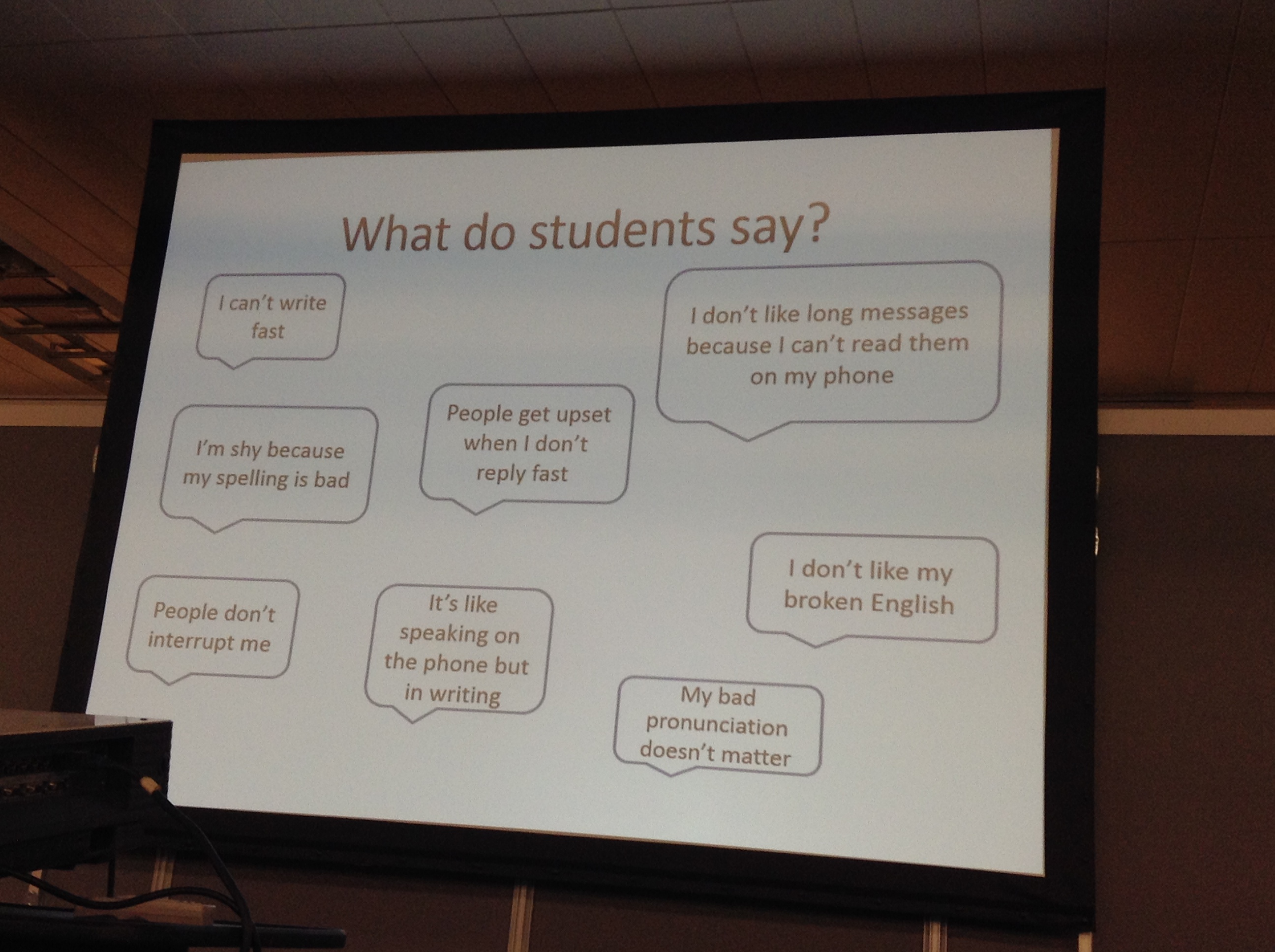
What do students say?

photo (3) copy

What Fiona’s students say…

Fiona says there are areas we can definitely help with e.g. “I can’t write fast” or “People get upset when I don’t reply fast”

Fluency vs. accuracy

For speaking skills, we tend to focus on fluency. But why, with writing, do we focus almost exclusively on accuracy rather than fluency? There’s a place for fluency focus for writing as well, or should be.

Possible activities

  1. silent discussion
  2. silent shrinking dialogue
  3. silent timed dialogue
  4. paper forum

1. Silent discussion

  • Flip-chart size paper with topics written on e.g. Italian food is better than English food, and coloured pens
  • Put learners ideally in groups of three
  • The idea is they contribute in no particular order, interrupt by twisting the paper around or walking around.
  • To ask the T a question, also needs to be in writing

Can be done as a lead-in to a unit. Takes about 15mins. Some music (without words) in the background is a good idea.

Benefits: 

  • Mimics instant messenger/chat rooms with multiple threads
  • Some students feel less inhibited
  • Can be used as a lead-in, but also to recycle topics, ideas and vocabulary
  • You can take it away after and look at some of the errors but emphasis should be on fluency
  • A good way to settle the class
  • Easy to eavesdrop unobstrusively

Silent Shrinking Dialogue

  • Pairs
  • Each student writes an exactly 12 word question
  • Set some rules re contractions counting as one word or two etc.
  • Reply [in writing] with exactly 10 words and so on
  • Generates a very positive atmosphere and positive energy

Benefits (at higher levels)

  • forces students to manipulate language by omitting words, using contractions/full forms, voice (Active/passive) and different sentence structures [to fit the criteria i.e. word number]
  • personal, genuine communication albeit in an unnatural format
  • mimics the way digital conversations often taper [e.g. start long and end just with a smiley face!]
  • linguistically challenging

Silent timed dialogue

  • Like silent shrinking dialogue but with a time limit and no word number restrition
  • agree a length of time so that they have to take turns at the time limit
  • reduce the amount of time for each interaction

Paper forum posts

  • Students write a short “forum post” (having looked at examples in class)
  • “Post” these on A3 pieces of paper, so that there is space to write underneath, and displayed gallery-style around the classroom.
  • Other students can add comments
  • Students can grab their own and see what’s been written
  • Can be adapted to be like BBC “Have your say”

Speaking? Writing? A new skill? Or a new genre? Open to questions…

Some audience members thought a new genre, some thought it a new skill. There was no “right answer”.

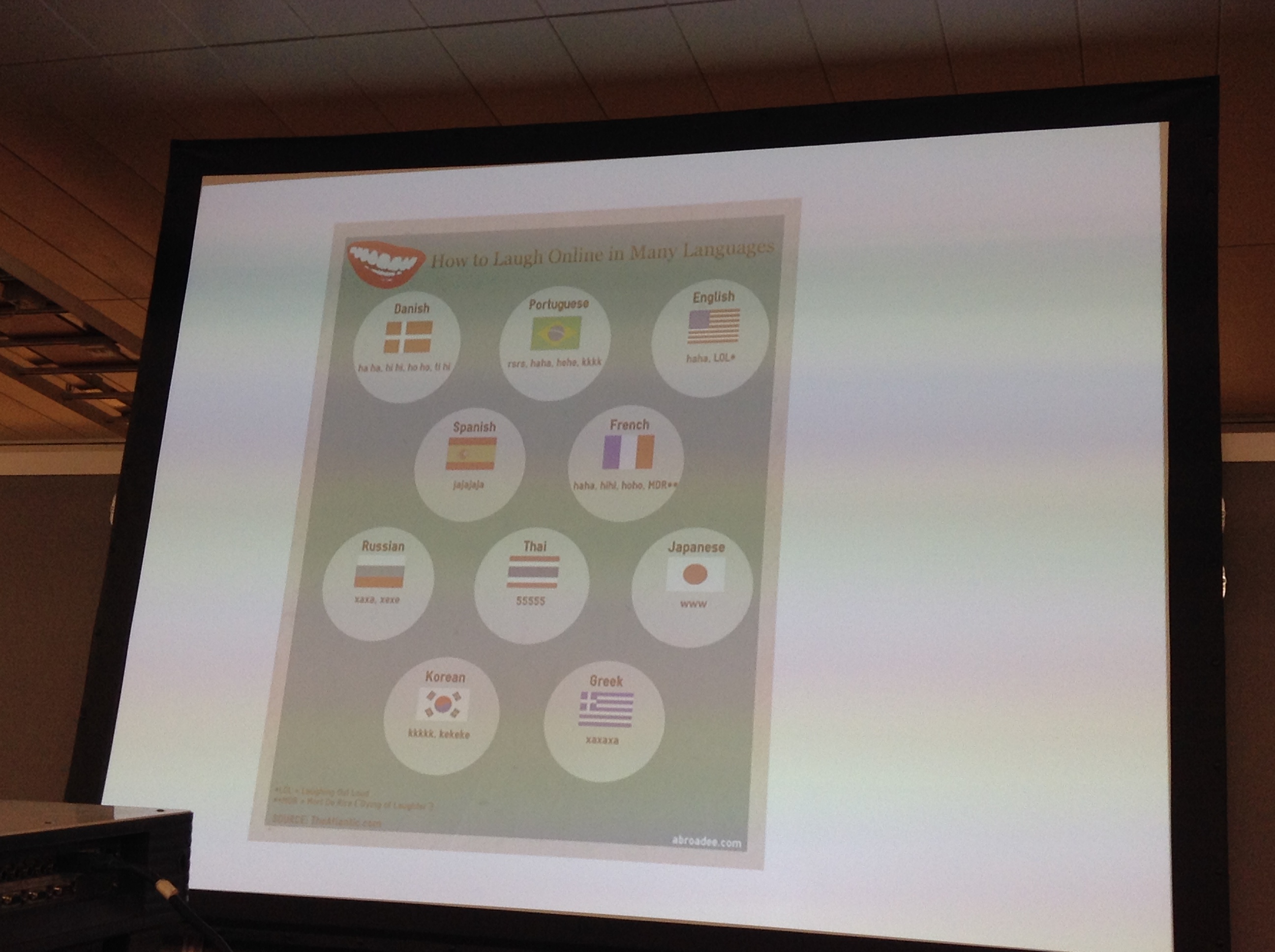
Q: An audience member queried contrast between English and other languages?

A: Fiona told us that “How to laugh online in many languages” generated a lot of classroom discussion:

photo (4)

Different ways of laughing online made us laugh! 🙂

It was an interesting talk with some nice take-away ideas.

IATEFL 2014 Final Day Plenary: Sugatra Mitra

It’s the final morning of IATEFL (boo hiss!) and despite the general lack of sleep this week (oh well, can catch up when I’m dead!), here I am in the auditorium ready to hear what Sugatra Mitra has to say…

 Schools in the Cloud

A few things that we know and a few things that we don’t know and need to find out…

We know it’s difficult to get good teachers in remote places. You could treat it as obvious but there is some interesting data. A small experiment: to go out of New Delhi and drive into rural India, then every time a school is encountered, administer a basic government test of English, Maths and Science. The results were plotted against the distance from New Delhi. Why would the results come down as we go more into rural India? Asked the same question at each place: “Are you happy here or would you like to work somewhere else?” In Delhi, the answer is “happy here”, even happier in suburban New Delhi. 50 miles out of Delhi, still ok. 100 miles away, Delhi is getting a bit far away but still ok. 250 miles away, “anywhere but here”. So everyone tries to get a job in Delhi and the good teachers get the jobs. How to solve the problem? Pay teachers more if they work in remote places? The teachers who were 200 miles away said, “but what would I spend it on?” So they trained the teachers to make them really good – and off they went to Delhi! It’s a social problem.

Sugatra didn’t find the same results in the UK but if you look at the GCSE results, they are not uniform. What would explain the variation for this country? He took data from North East England and tried to look for correlations. Found that the density of council housing (lower cost housing from the Government) plotted against GCSE results shows that the higher the density, the poorer the results. If you talk to the teachers in these areas, they say the children are lovely but it’s not a very safe place to live and work in.  They too want to go – to a safer place.

Remoteness in India/Delhi was geographical, in the UK socioeconomic. There are areas all over the world that are remote for different reasons. Each of these suffer from inadequate schooling.

Can we solve the problem by taking the teacher out of the equation? Sugatra tried a simple experiment. Computers work the same way wherever they are. Whether in remote India or remote Britain, they would work the same way. A computer can’t replace a teacher.But a computer, whatever it can do for children, will do it to the same extent wherever it is. The question is, what can it do?

  • Groups of children can learn to use the internet on their own: in Delhi, only rich people’s children could attend expensive courses where Sugatra worked. And it was next to an urban slum. He used to wonder how many good programmers he was missing because there was nobody to teach them? So Sugatra wanted to find out what would happen if you gave a computer to these poor children? Shouldn’t someone show them what to do? No, because we don’t have anyone to do that. Not sustainable. So just gave it to them. So how do you give a computer to a slum? Sugatra followed the example of banks and stuck it into the wall. It was running windows, had an internet connection and was all in English. The children didn’t know any English, had never seen a computer before and didn’t know what the internet was. The children came and asked what it was but Sugatra didn’t tell them as this would be a point of intervention that couldn’t be replicable over the world or not sustainable. So he said “I don’t know.” Eight hours later, colleagues reported that the children were surfing and teaching each other how to surf.
  • This was back when computers were new. He repeated the experiment 200 miles from Delhi to a village with a school but no teachers. He put the computer in the hole in the wall. Came back in a couple of months and saw the children playing games on the computer. They requested a faster processor! How did they learn these words? When asked, they replied “you’ve given us this machine which works only in English so we had to teach ourselves English in order to use it”.

What was causing this kind of self-taught English to happen?

It was happening because he/the teacher wasn’t there. Can a teacher being there stop the learning?

After that, Sugatra got some funding from the world bank and spent the next five years exploring the hole-in-the-wall computer: put them in different places and collected results for computer literacy against time. Groups of children, given access to the internet, and left unsupervised, will in a period of 9 months reach the same level of computer literacy as the average secretary in the west. This raised a few questions about training and the purpose of training…

The question in Sugatra’s mind was, “how does this happen with such completely replicable results?” He had no clue. The press called these experiments the hole-in-the-wall experiments. When you go around and see the kids doing something amazing, you ask them what you are doing, they stop and say “nothing”. An observer changes the result. A hidden video camera? Not ethical unless you tell them, and then they change their behaviour (make faces at the camera!). So cannot say “how” they are doing it, only what.

So he started asking them to do things.

E.g.

Sugatra: There’s something called a quadratic equation.

Children: How do you spell it?

S: I don’t know. <goes away>

25 minutes later, the children tell him about quadratic equations.


Hyderabad, 2002. 

Children were learning English, knew English, from local teachers. The teachers had a strong accent, so the children who learnt here came up against barriers when trying to get a job, due to their strong accent. How to improve your pronunciation in the slums of Hyderabad? Sugatra gave them a computer with a speech to text programme, Dragon. It was new then. You speak into the computer and it types out what you said – if it understands you. They tried it and it produced complete nonsense. He told them he’d leave it there for 2 months and they had to make themselves understood by it. They asked how. Having perfected the pedagogical technique, he said “I don’t know!”

2 months later: Asked one of the children, “How are you?” and he replied “Fantastic!” They had downloaded the speaking Oxford dictionary. You type a word in it and the dictionary speaks it back to you. They listened to it and tried mimicking it with Dragon. The project showed that learners, if they have no choice, will invent pedagogy. (Without baggage – they don’t know who Piaget is!)

Is there anything that DOESN’T happen by itself?

Research question: Can Tamil-speaking children in a remote village learn the biotechnology of how stem cell reproduces, using a hole-in-the-wall computer?

So Sugatra inputted some data into the computer on molecular biology from a western college. The 12-year old children wondered if it was a new game. He said it wasn’t a game but an important subject. That it’s exciting and interesting but will be lost on you. I’ll be back in a couple of months to see what you can do. They said “It’s all in English and has big science words in it, how can we understand it?” Sugatra said, “I told you, you can’t.” and left.

2 months later, he went back and found that they had been looking at the material every day. And they said, well apart from “biotechnological sentence”, we haven’t understood anything else. They had got from 5% to 30% in the 2 months, from pre-test to post-test. How to get the marks up (In biotechnology and English) another 20 notches. He got someone to use the grandmother technique – stand behind them and ask them how they managed to do each thing, how wonderful it is etc. Admiration as an educational method. This went for 2 more months.

2 months later: results had gone up to 50%.

This is not learning the way we understand it. There is something else happening, a new mechanism. Sugatra published the results and got a massive response ranging from “This is very interesting” to “this is rubbish”. Then some people wanted him to try the hole-in-the-wall experiment in England. He objected – the children would freeze…

But he turned the hole-in-the-wall inside out. Take a classroom of 20 or 30 children and shut down the computers until you have one computer for every 4 or 5 children (same size of groups as clustered in India). The children would start clustering and talking to each other, so you give them something absurd to. An absurd problem.

E.g. with 12 year olds. I’m going to ask you a question that not many people know the answer to. “Why is it that most men can grow a moustache but most women cannot?”  Within 30 to 40 minutes, they have gone deep into the science behind it. It’s a big question, not a small question. The answer stretches across the curriculum. This kind of big question is what you need to trigger this.

This became known as a “Self-organised learning environments”: Sugatra looked at the whole thing through a physics lens (his background) and this is what he saw.

We know Teachers can be ‘beamed’ to other places using the Internet. Sugatra formed “The Granny Club” – volunteers who give up an hour a week to talk to children around the world. This is the current experiment.

But we don’t know if children can learn to read by themselves. Sugatra is running experiments on this currently but it’s early days…

Curricula around the world need to be revised to include the internet

Sugatra argues that this needs to happen. Pedagogy also needs to make use of the internet. Use the problem-solving method, using collaboration for problem-solving and decision-making. Bring the internet into the examination hall. Of course the exam papers will have to change and the teaching will have to change. The current system is preparing students for dead employers – it looks like olden days… The current system is obsolete. So it’s time for change.


IATEFL 2014 Pecha Kucha!

This is the first year that I’ve made it to the Pecha Kucha and I know a couple of the presenters – Sandy Millin and James Taylor: very excited to see what happens…

Pecha Kucha means talks that last for 6 minutes and 40 seconds, with slides moving on automatically and speakers needing to speed up to keep up – or slow down as the case may  be!

Speaker 0: The host models a pecha kucha and explains what it’s all about, as well as introducing speakers in a …different way…

Keep Calm and Pecha Kucha!

20 images in 20 seconds (the length of time each image is shown for…) And what wonderful images! And a talk about what teaching involves.

Speaker 1: James Taylor

The power of Yes! How James got to Pecha Kucha….

BELTA? #ELTchat? TeachingEnglish blogger? iTDi? Own blog?

Either which way, said YES! And then thought about all the people who he couldn’t have done it without: The BELTA team; the #ELTchat group; (I’m in a pic there!); the iTDi community. Lots of different people with different goals, needs, interests etc who work together as a team to get somewhere we want to be.

Everyone is saying YES to these opportunities. And that’s really powerful to be around. So James followed the model by saying yes to Pecha Kucha.

“to stop being me for a little while and to become us” [pop boffin Brian Eno]

Accept the limitations, you can’t say yes to every single thing in front of you, and you never know what is coming next…

Twitter and Larry David: The first step… James joined because people told him he should as one could follow people like Larry David (who has only ever tweeted once!)

Fantastic talk!

Speaker 2: Bita Rezaei

Enough of the hearts and flowers image of teaching out there, now for the harsh reality…

How attractive is teaching really as a career?

People apply for the job until they find what is the real job. We’re all in it for the love of it but at the end of the day, bills to pay, kids to school, no holiday going to happen!

Fame and excitement – not happening to all of us! Practice can become an eroding routine.

2013 Global Teachers Status Index: China is good for teachers!

But we have made progress – until 20th century: no support/unions etc

Keep calm and call for action! We deserve a higher status in society! We are and always will be the candle that consumes itself to produce light to others…

Speaker 3: Damian Williams

A journey that he has been on for the last year and a half. Across different countries and continents, meeting different people. Started with a book – Linguistic Landscape in the City. The study of English as it’s seen in the urban landscape.

Taking photos every time he saw English and annoyed his wife! Looking for English in the urban landscape. The landscape told him:

“Go out and get some fun!”

So he did. And noticed code-switching and symbols.

Once you start looking for English, it becomes an obsession! Time to go to another country. But there was English in the airport as well. Went to Argentina and there was English in the menus “Give little garlic a close shave” and in the toilets, put rubbish in the “basket case”.

So he went to Europe and found…yellow penguins! And the linguistic landscape became the artistic landscape. Art installations. A way of expressing things. Then the artistic landscape joined with the linguistic landscape.

Sometimes the linguistic landscape is beautiful, sometimes it is direct “Sod the sunshine come and sit in the dark” at a cinema in summer! Sometimes it just doesn’t make sense “Drugstore’s full time”. Sometimes the most simple messages are the most powerful: Keep calm and carry on…

Most importantly, as language teachers, it’s amazing because it’s everywhere! It gives the community an identity. And it’s free and available to all!

Speaker 3: Sandy Millin

19 things I’ve learnt as an English Teacher!

  • Timetables are impossible (as a DoS!): no one is ever happy! They are never right! Fact!
  • Course book trivia is amazing but doesn’t crossover with what you need to win a pub quiz! It just doesn’t!
  • Rain stops play: In Paraguay, going to work in the rain is for teachers not students!
  • Take your camera: Mr Rubber Man might appear – created by a student in class to tell a story using prepositions and Cusenaire rods
  • Look up: In cities, the ground level is boring but look up and it’s beautiful e.g. buildings
  • To learn the local language, teach kids: they shout it at you!
  • Stereotypes aren’t true: Chinese kids are not necessarily quiet…
  • Stereotypes are true: Spanish people like dancing, Slavic women are gorgeous and the weather in the UK can be pretty rubbish!
  • Absence makes the heart grow fonder: I like the UK a lot more from OUTSIDE it!
  • It’s hard to escape the bubble: When you first get there, it’s very easy to get into a comfort zone and speak to very few people…
  • When politics take over, even the kids care!
  • Life goes on! I live in Sevastopol, I’m still here.
  • Listen to people: you never know what you will learn – kids, adults – you’ll learn about language, culture, a new game, anything!
  • Reserve judgement: yours is not the only way or the only opnion. So just listen and you never know what you’ll learn!
  • There’s no point stressing! Presentations are great and all stressing does is make you nervous!
  • Share: It’s life-changing! See James Taylor and ELTchat above. If you start giving, you get! It just happens!
  • Being connected changes everything! You do so much more
  • We’re all from different places: geographically, culturally, socially, we have different opportunities but we all want the same things! Health, happiness, friendship, good food…

Everybody all over the world, this is what they want to life!!

Speaker 4: Thomas Jones

Pecha Kucha – ancient Japanese phrase for “Get on with it!”

Teaching and the horror: rigidity, structure and being strict. Prefer a class of vikings rather than bored people! You’ve all survived!

94% of people in ANY classroom do NOT want to be there! There’s a lot of romance about teaching but….! Work – a terrible imposition on time that could be spent doing better things. So at least do something you are interested in! At least one person in the class will be…!

Where would you rather be? Here! In bed! I always ask students where you’d rather be and then say “I’m sorry”… they come from the exotic to the rain and British people and bad food!

“i don’t understand why I have to go to school at all, the internet knows more than all the teachers put together” – an 8 year old. Don’t go to work on Monday if you can’t answer that!

“We don’t need no education: Yes you do. You’ve just used a double negative.”

Take yourself seriously, but never yourself! Tattoo it on your hand refer to it frequently!

Speaker 5: Cecilia Lemos

“Keep calm and go to ELT Heaven”

We deserve to go to Heaven in the end don’t you think?

But “You have sinned!” – going straight to hell. So how to redeem self?

The Ten Commandments of ELT (to get to heaven)

  • Thou shalt think of ELT before all others
  • No idolising David Crystal, Scott Thornbury, Penny Ur or Michael Lewis
  • Read thy authors: quote them wisely and don’t confuse their approaches
  • Thou shalt rest on Saturdays! (Oh yes!)
  • Do what the experts tell you: if they say “jump”, you say how high? If Luke Meddings says teach unplugged, don’t you dare plan that lesson!
  • No violence in the classroom: No matter how many times your student says “I have 35 years old”. Do not hurt them.
  • Be faithful to your teaching approach: but need to try so many different things for each different group you have… so you can’t!
  • Cite your sources! Do not steal other peoples’ work.
  • You must not say bad things about that teacher who teaches differently from you! Even if they get a lot more laughter in their class. Don’t gossip and say they don’t teach.
  • Thou shalt not envy your fellow teacher’s materials, groups or conferences!

Solutions:

Say 10 hail David Crystals! (And some more.) Then otherwise join us in ELT purgatory!!

Bonus speaker: Lindsay Clandfield

The history of ELT conference Pecha Kucha… and discoveries about memes…

Rage faces: used as vehicles for humourising shared experiences.

Y U No Guy: TRB – Y U No have right answers? USB: Y U no fit?

Doge: It’s based on Sheepy the dog’s internal monologue written in single words. Deliberate wrong collocations.. e.g. very workshop…so teach…many happy….

Macro image: Bad luck Brian – e.g. last slot on Saturday for talk at IATEFL

Annoying Facebook girl: Vapid status updates and attention whoring

Facepalm: a message of dismay and reaction to momentary relapse of judgement, the agony… 2000 English Teachers in Harrogate – David Cameron facepalm

I accidentally: I accidentally and leave out verb. I accidentally … the conference centre – leave people in confusion…

http://www.knowyourmeme.com

http://www.memegenerator.com

Says this is last PK. Signs up for last year’s event!

I love pecha kucha! I recommend you watch the recording if you weren’t here live or watching the streaming. This post is at best a nice memory of a fab hour! The standing ovation was well deserved…



ELT Teacher 2 Writer: Training teachers to be writers

Excited to be at this talk as I missed the ELT Teacher 2 Writer talk at Liverpool last year… More materials writing-related larks! 🙂 And it’s clearly going to be a good one – we have exciting task handouts on our chairs and key-rings being given out! 

Training teachers to be writers

Sue and Karen are going to talk to us about how ELT Teacher 2 Writer can help teacher materials writers.

  • the database: established writers and people interested in writing can all be in the database

Publishers can search the database when they are looking for new writers but also when they are looking for people to pilot materials/write users reports/answer questions for market research. There are a mixture of publishers national, international and independent.

  • the training modules: developed by ELT Teacher 2 Writer

Where does materials writing feature in a teacher’s professional development?

Within the British Council Framework puts it at stage six (specialist) but teachers do it from day 1, with their own learners.

ELT Teacher 2 Writer did some research into existent writing courses and tried to learn lessons from these. (All non-ELT related) e.g. journalism, creative writing… They discovered that the only common ground that all of these course had was a module that urged users to know their market/know a little bit at the industry. So they had a look at ELT materials writing to see what was involved in writing materials.

They broke it into 3 main categories:

  • core skills
  • market-specific (e.g. ESP materials)
  • component-specific (e.g. writing a teacher’s book/grammar summary/worksheets

There are now 30 titles on the website. All written by experienced authors and they share the lessons they learnt in their own process of being published. All available for download on Amazon/Smashwords (special IATEFL discount ends tomorrow!) These are relevant for people writing for developers, teachers writing for their own classrooms and teachers wanting to self-publish.

Task 1: How ELT publishing works  – time to do a task! (T/F statements about publishing)

  • True: publishers DO decide things well in advance. They have 5 year plans, which they check at intervals to make sure they still make sense. They use market research to inform this.
  • False: the best way to get published is NOT to send a complete manuscript to a publisher!
  • False: you don’t need an M.A. or a Delta to write materials. Relevant teaching experience is essential. Delta/M.A. can be positive but publishers may fear an overly academic manuscript.
  • True: lots of investment goes into publishing, it is expensive, so publishers DO want to make sure everything works and DO do a lot of market research to this end.
  • False: You *do* have to meet deadlines! In publishing, there are many people writing to the same schedule. If you don’t meet it, there is a huge negative knock-on effect.

Task 2: What makes a good rubric? (or direction line in Am. E!) i.e. instruction to the students within a piece of materials.

This is an important skill to learn and is thus included in several ELT Teacher 2 Writer modules.

Rubric checklist

  • Rubric language should be less complex than the language point being addressed.
  • Use small sets of words
  • Use the same rubric for all similar activity types
  • Be careful with staging – sometimes better to break things down into two activities rather than one.

We had to apply these criteria to some sample rubrics. We saw one that was too long and in which it wasn’t clear what was required. We saw one where the language used was too complex for the learner level aimed at – here it would be necessary to simplify the language and helpful to include examples. The third was too complex and needed breaking down. The fourth was rambling and dense, requiring major surgery to sort it out!

Task 3: How to write a graded reader?

Graded readers are great to write – they combine fiction and education! The answer to the task question? Can be found in Sue Leather’s module.

Sue (presenter) read from Sue (writer)’s module to comment on this. Here are couple of quotes:

“An idea is the story’s essence”

” It should include a vital issue that needs to be resolved one way or another”

Skills are needed for the following:

  • language and story
  • drama and premise
  • high stakes
  • conflict and choice
  • action
  • character
  • dialogue

We applied this to three story ideas, deciding that two had wheels and one was dull – the two with wheels are in fact in print! The other, not so much…

Task 4: Writing a critical thinking activity 

What is a CTA? What does a good one look like? Equally importantly, and what may shed some light on this is, what is it not?

  • It is NOT a pure comprehension question.
  • It is NOT a do you agree/disagree discussion.
  • It is NOT a T/F statements activity
  • It is not a question about the literal meaning of vocabulary in a text

In a general comprehension activity you find:

  • identify ideas
  • vocabulary meaning-related activities
  • agree/disagree discussions

In a critical thinking activity you find:

  • Why does the author present the ideas like this?
  • Why are these vocabulary items chosen?
  • Does the author support the ideas? How? What evidence is there?
photo (3)

Some critical thinking activity types

We looked at some sample activities and decided whether they were CT activities or general activities.

Finally, we learnt some more about the ELT Teacher to Writer website:

As well as the database, it includes a resource section for writers.

The Writer’s Toolkit

  • style sheet: publishers have in-house ones of these – if you are working independently, this  will help you to be more consistent.
  • template: example template for styles for rubrics/body text etc. and layout/order/structure
  • permission grid: a grid that lays out the information that is needed in order for an editor to apply for permissions to the copyright holder. It is very important to get all the permissions needed e.g. for different platforms etc.

You can find out more about ELT Teacher 2 Writer by:

Liking their Facebook page: http://www.facebook.com/ELTT2W

Following them on Twitter: @ELT_T2W

My last talk for the day and like all the others I’ve attended: super-interesting and worthwhile! 🙂


Amy Brown – Reading for pleasure: a path to learner autonomy?

Well, I had to come to this – after all my reading project shenanigans, I was very interested to hear about another reading project…

Reading for pleasure: a path to learner autonomy?

Amy is a senior teacher and the coordinator of the IH Newcastle Personal Study Programme (guided self-study – 1 or 2hrs a day, timetabled, supports regular classes). The ethos of PSP is learner autonomy.

Amy starts by discussing the prickly term of learner autonomy. Not everybody has the same idea of what it is. She asked around the staffroom, getting teachers to say what they think about learner autonomy… but first we had to discuss!

What do we mean by learner autonomy?

The answers from Newcastle…

“learners learning to learn for themselves”

” having the ability to decide for themselves”

…and many more.

Key characteristics of reading for pleasure

Amy formed her own idea of what exactly this means. Three characteristics relevant for this project:

Choice, individual and at learners pace [and one more I missed!]

In the beginning…

Magazines and newspapers were available for reading and a small library of graded readers. Students couldn’t take them home, as so small, so no home reading. There were also trips to the library/bookshops, giving help in book selection (this guidance was appreciated) e.g. this is modern English so could be helpful for you to read.

They wanted more emphasis on pleasure…

This necessitated a bigger library and not only graded readers. Many books were selected, recommended or donated by teachers. Some books have been made into films. Some are for younger speakers. But authentic.

PSP Induction – conversation starter “have you ever read a book in English” (Just like I did with my project, but in the classroom!! :D)

Did many students take up the opportunity? Yes, but mostly those who were readers in their own language and the problem was, when the books came back, the enthusiasm had dipped. When they were returned a few weeks later, uncertainty as to whether they had actually finished…

Pre-check out questions: “What are you going to do when you come across new words?” – entry to a discussion on strategy. “What made you choose this book? – conversation starters.

There were also follow-up chats – how is it going? where are you up to? Also in written form through the journal system. If a couple of students were reading the same book, got them together to discuss also.

But were we getting to new readers or only established readers?

The Reader Organisation

Began in Liverpool, then moved to Newcastle. They promote literacy and wellbeing. They are commissioned from the local council, mental health associations etc. It’s always voluntary attendance, no one is forced to go. It’s a “shared reading group”. Amy mostly found examples with younger learners within ELT, rather than adult learners.

It’s low pressure. The reader (leader – trained reader) reads aloud and stops at natural breaking points, and asks questions re what might happen next and what do you think happens? It involves a lot of reading aloud. There is never any pressure to read. People who read out loud in these groups do it voluntarily and it can be a liberating experience. Amy attended a meeting, didn’t read aloud, but came away feeling really keen to read! She recommends that you google their website.

Amy also came away thinking about how to implement within the school.

How would learners react?

Within this project should be no follow-up activities. The reward should come from the reading itself.

A reader came into IH Newcastle for a 4-week collaboration. B1+ 2 weekly groups, max. 12 students led by “a Reader” (not a “teacher”) – to create an atmosphere not of class but of reading and pleasure. A mix of nationalities and genders. A teacher was also invited along. Luckily there was no asking about language points. They did a short story called “The Umbrella Man” by Roald Dahl

Lots of discussion and personalisation came up naturally and lots of prediction because it was suspenseful story. Without any visual aids.

What about the responses?

Feedback came from observing teachers – a form with prompts to complete.

  • No phone or dictionaries…the students were in the moment.
  • not rushed, not over done [a natural pace]
  • focus on overall meaning
  • lots of enthusiasm from the teachers [and their learners had told the class about it]

Feedback from students mostly came via class teacher “spies” from natural conversations where the students told their teacher about what was happening in the group.

Some of the students really loved it.

“It helps me to understand books better”

“After the group, I think – I need to keep reading” [in a focus group at the end – enthusiastic about reading when they left the group]

“It doesn’t feel like study” [important in a study-packed day!]

A lot of the students invited were IELTS students but the response:

“I need to practice more the exam” …something that needs working on! Students don’t see the benefit of non-exam focused work.

How is all this promoting learner autonomy?

We all discussed together and thought yes!

Finally Amy talked about where the project was going next…

  • more shared reading (more levels/choices)
  • silent reading groups
  • shared reading with IELTS texts? Splitting it into short stories and poetry separately.

Amy can be contacted at amy@ihnewcastle.com in relation to this project!