Extensive Reading (part 2)

In this post, I wrote about my own experience of extensive reading and reflected on the idea of getting students a) reading extensively and b) benefitting as much they can from it. Following on from this, I have attempted to start the ball rolling and get the pages turning (at the hands of my learners, of course!).

page turning

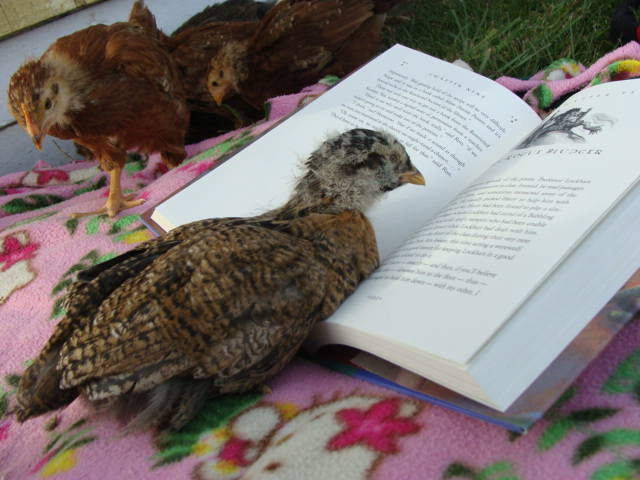
Let the pages turn! (Taken from advanced google image search filtered for “labelled for commercial use with modification”)

My experimentation thus far is informed by:

  • what I have learnt about learner autonomy (as well as the role multimedia can play in facilitating this).
  • what I have learnt about motivation.
  • what I have learnt about the relationship between these.
  • what I have learnt about theories of learning (particularly drawing on social constructivist ideas).
  • my own experience of extensive reading (as language learner and teacher) as well as others’ (e.g. the experiences related during a talk at a MATSDA conference this year).
  • reflection on the relationship between the implications all of these and the learners in my classes.

My goal is:

To get my learners reading regularly, over a substantial period of time (not a one-week wonder) and reaping the benefits of this. However, it is important that it comes from them, that they are doing it of their own volition not because it’s forced on them, not because Lizzie said so. Ideally, it should also be something they can enjoy. Of course, pleasure is multi-faceted…

For example, this could be pleasure that results from:

  • relaxation.
  • discovery/satisfying curiosity.
  • achievement/success.
  • overcoming a tough challenge.
  • finding something really difficult but persevering nevertheless.
  • feeling a sense of progress – linearly through the book and/or in terms of language learnt from it.

And the type of pleasure experienced, if any at all, is likely to shift regularly.

Why is pleasure important? I think because it is then more likely to be something they do long term rather than just this semester. (I read in French for pleasure still. And it keeps my language ticking over.)

My classes:

For now, I am focussing on adult classes. (Perhaps when I have done my IH Young Learner training certificate, which I am starting soon, I will think about how to set about this project with my low-level teenaged learners…!) I teach a mixture of levels (currently pre-intermediate, upper intermediate and advanced) and I am using a similar approach with all of these levels. I’m keeping track of what I’m doing with the learners and how they are responding over time by recording anything of interest/relevance in a 50-cent notebook. (The same notebook that I’m using to keep track of my experimentation with various multimedia tools for developing learner autonomy, as I think extensive reading can be an important tool for autonomous learning and autonomy is important in extensive reading.)  It’s early days but it’s already really interesting! (I think so, anyway :-p)

My approach (the beginning):

I started the whole process by putting the learners in small groups for a brief discussion about extensive reading (scaffolded by some simple prompt questions).

This enabled me to gauge:

  • their attitude to reading
  • what they already know about the benefits of reading for language learning
  • what approaches they have used and how well (or not) these have worked for them.

At both lower and higher levels, the learners had experience and ideas to share. Unsurprisingly, a mixture of approaches were discussed. Of course, they then looked to me to tell them “the magic way” but that was not to be…

I responded that:

  • all the approaches they had discussed were equally valid
  • all the approaches had different benefits/drawbacks.
  • varying the approach used could be the best way to gain the most benefits in the long term.

I think this was important to discuss, because there is a danger that learners may think there is only one “right way” of doing things (“I must read x type of book in y time using z approach, if I don’t I won’t learn anything”), and if the perceived “right way” doesn’t work for them, they may give up altogether, feeling that their way is wrong and therefore not worth doing. Whereas, there are, of course, any number of ways to skin a cat/read a book/learn a language.

They also wanted me to tell them what to read, so we discussed the benefits/drawbacks of:

  • reading a book that you have already read in L1 vs. a book you’ve never read before.
  • graded readers vs. authentic texts.
  • books vs magazines/newspapers.

I then gave them the task of finding something they wanted to read in English. The only stipulation was it had to be something they could read over time. So, a book, a book of short stories, a newspaper/magazine that they would read regularly (as vs. a single article). I encouraged them to find something that they want to read.

This, of course, is very subjective:

  • Some learners welcome the challenge of an authentic text (like me and Harry Potter in Italian – it may seem a ridiculous prospect, an elementary learner trying to read Harry Potter written for Italians, but it’s working! And, as it happens, one of my level 3’s has picked Harry Potter in English – which he says is difficult but he is enjoying it and wants to persevere – so far! 🙂 )
  • Some prefer the security of a reader graded to their level and will benefit more from this.
  • In terms of subject matter, one man’s meat is another man’s poison.

I think that whatever learners choose to read, if the desire is there, they can gain something from it. Why? Because it will add to the all-important motivation to persevere. And perseverance = exposure to language in use.

The learners themselves had ideas of where to get hold of English reading material:

  • local bookshops
  • the library
  • online sources, for those with kindles
  • I also posted a link to the Gutenberg project on Edmodo for added inspiration.

My approach (further information):

Compulsory?

I did not make this project compulsory, but explained that once a week we would use ten or so minutes of a lesson to discuss progress/difficulties/approaches used etc. As we had already discussed the benefits, they understood why I was introducing this into their course and were receptive to the idea. I’m not forcing this on them, I’m offering it to them as a potential learning tool and scaffolding their independence in using it. A couple of students in one of my classes don’t want to read. So they are going to listen extensively instead. They are going to watch series/films in English with English subtitles on (so, a bit of reading too!). That’s fine. We’ll see – perhaps as the course progresses and the other learners who are reading share their experience of it and how it’s helping them, these learners may be tempted to experiment outside of their comfort zone. Meanwhile, any exposure to English is better than none!

Level?

With the lower levels, this discussion came the lesson after we had done a lesson of which part had focused on learning new vocabulary and the kinds of things you need to know about a word in order to learn it. This tied in quite nicely: Their homework was to find three words/phrases that were new to them, find out the type of information that we had looked at in class (collocations, prepositions, examples of different meanings of a single word where relevant etc. etc.) and post this on Edmodo, to share with the other learners. I put a link for the Oxford Learners Dictionary onto Edmodo for them to help them with this.

With higher levels, I have some other tools up my sleeve to try out with them, but meanwhile the project levels itself by choice of reading matter.

Autonomy potential?

Subsequently, I have told learners that I won’t set this vocabulary work as homework anymore but it is still something they can continue to do. It can also count towards their 10hrs guided study (learners at IH Palermo need to complete 10hrs of independent learning – any time they use English outside of class of their own volition i.e. not homework). Soon, I want to introduce Quizlet as a way of reviewing the vocabulary they accumulate. Over time, I hope to help them build up a range of ways to use reading material and any vocabulary they choose to extract from it. (I’m not dictating when or how often they should look up words, but between them there is a range of approaches in use, which I am encouraging and will continue to encourage experimentation with.)

I have also asked two levels (so far) – pre-intermediate and advanced – to set themselves mini-goals for their reading over the next week. It was their choice what their goal was, the only stipulation was that it should be small enough to be a realistic aim for one week of reading. Next week’s ten-minute discussion will enable them to share what progress they have made with their goals and consider how realistic they were in light of this. Hopefully, success with the goals will be motivating, in terms of the reading, and if any learners don’t achieve their goals (there are bound to be some), collaboratively (and with my help if necessary) they can work out why and adjust their goal-setting for the next week to make their goals more achievable while still challenging. This will hopefully avoid demotivation by guiding learners towards a way of enjoying a series of meaningful mini-successes rather than becoming dispirited because the end goal (the usual, vague “improve my English for xyz reason”) doesn’t seem to be getting any nearer. I’m doing this because I think motivation management is important for the development of learner autonomy and perseverance.

Conclusion

So, it’s early days but I would say a positive start: the learners are on board. For me, the next step is to help them sustain this motivation rather than get bored/lose interest/give up. Additionally, of course, I want to help them become more autonomous learners. This extensive reading project is one strand of that. I have a handful of ideas up my sleeve (in relation to this project and the larger learner autonomy project) and time this weekend (a three-day weekend, hurrah!) to reflect and formulate the next phase of my plan of action.

What’s next?

Well, if you want to know the results of these experiments (what worked, what didn’t, evaluation at the end of these learners’ current course/level, what else I did to try and make these projects successful i.e. the afore-mentioned ideas lurking up my sleeves), I think you’ll have to wait till my British Council webinar on learner autonomy which will take place in February next year, as conveniently enough my current adult classes mostly finish towards the end of January next year (except for one that finishes in December) – just about in time to round up what I learn, and package it suitably for sharing with others… 😉

Your thoughts?

Meanwhile, as usual I would be very interested to hear from anybody with any thoughts on all this. As I mentioned in my previous post, I would love to hear anybody’s experiences of trying to get learners reading extensively and independently, as well as of being a language learner and using extensive reading as a learning tool.

Coursebooks and Cookery

I read this post about the coursebook as guidebook a while back, and found it an interesting metaphor. I wondered what my own metaphor for coursebooks would be, but then forgot all about it amidst the million other things I had to think about… Then, last night, when I should have been falling asleep but instead found myself hostage to a buzzing brain, it finally came to me in spades: For me, the coursebook is a cookery book. A recipe book. I have divided up my metaphor into sections but there is plenty of overlap between them…

asian recipes

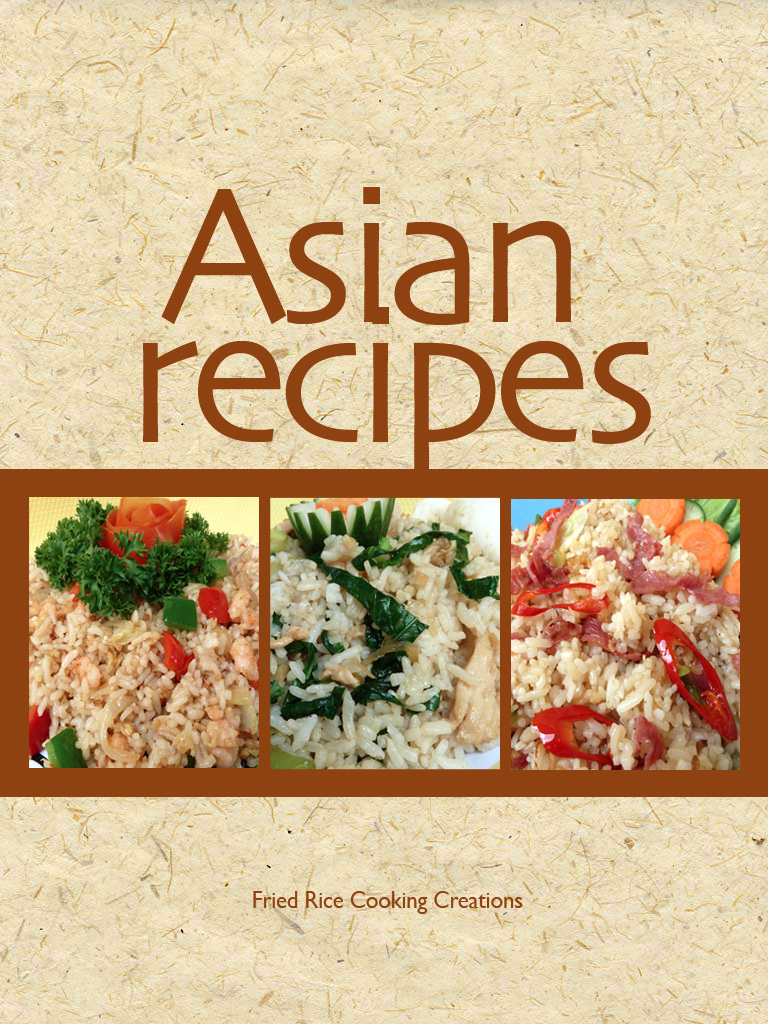
A recipe book ready for use! (Taken from Google advanced search: labelled for commercial reuse with modification.)

Construct

  •  Recipe books might be divided up into regions for a book dedicated to the recipes from a particular country or parts of a meal e.g. starters, mains, desserts, or any other, while coursebooks are generally neatly divided in some way, for example “units” (Headway), “modules” (Cutting Edge), “lessons” (Choices). For both, there is generally a handy map to help you find what you are looking for (gravies or pastries, roasts, desserts, reading or speaking, grammar, vocabulary)
  • There are recipe books for everybody – vegetarians, students, people who can’t cook, people who only  have ten minutes to cook, children, people who want to make a multiple-course banquet-esque meal – and course books for everybody – learners of General English (Global; Innovations), EAP, ESP, Business English, learners of different ages and levels and so on.
  • You don’t have to start at the beginning – you can choose the recipe that best suits your/your learners’ needs at a particular time. You can select recipes from different books and combine them to make your own special meal. Or you may go through the recipe book in order but not use all the recipes (there’s only so much rice/grammar/potatoes you need with one meal! And the recipients of your cooking may not need feeding up with grammar/potatoes in all lessons/at all mealtimes).
  • Recipe books and coursebooks both tend to be written by people who know what they are talking about and know (from experience and learning) what ingredients work well together. Therefore, they are a useful tool. Neither are intended to be bibles. (Or their authors would have written….bibles!)

Content/Use

  • Recipe books contain a myriad of ingredients and suggestions of ways to turn these into a tasty meal. Coursebooks contain activities and instructions for how to use these as part of a successful lesson. But the more you use the ingredients, and the more you learn about cooking, the more your understanding of what does and doesn’t work grows. You know that certain things need cooking. You know that certain flavours go well together, while others, well, just not happening.
  • This enables you to experiment – to combine ingredients in different ways not specified by the book in front of you. You may base your concoction on a recipe but substitute various ingredients that suits your tastes/needs/stock at the time. Just because you don’t follow the recipe, doesn’t mean your meal will taste terrible. Equally, just because you don’t follow the recipe, doesn’t guarantee something delicious either!
  • Experimentation is a messy business both in the kitchen and in the classroom. Sometimes it works really well, sometimes your version of the cake recipe just doesn’t rise. Of course, even if you follow the recipe to the letter, sometimes the cake just doesn’t rise either. Ingredients can be slightly unpredictable and you might have the amounts ever so slightly wrong. In the classroom, learners can be unpredictable. What works well in one kitchen/classroom for one chef/teacher may not turn out great in another.
  • Experimentation is likely to be haphazard/hit-and-miss if you aren’t doing it from a principled base. If, like I did when I was 8 years old, you attempt to make hot-cross buns by putting every single ingredient on your list in one big mixing bowl at once, you end up with a goopy mess and your mum isn’t best pleased. In the kitchen, we may think we are being entirely haphazard in what we are doing, but that haphazardness, when successful, tends to be informed with underlying knowledge about what does and doesn’t work. (8 year old me hadn’t learnt that bunging everything into one bowl at once does not a hot cross bun produce…)
  • Sometimes, if your experimentation goes really wrong, and you end up with a pan on fire, it’s best to put the fire out and start again! If an activity goes flop, sometimes ending it and moving on is your best bet. Sometimes, perseverance can lead to results – your recipe may look like it’s going wrong but you try a bit of this and a bit of that and the outcome is tasty! Sometimes, changing things around a bit during an activity can be the difference between success and failure. The trick is to know when to stop. If your pan is on fire, this is probably quite a good time to do so… :-p
  • However, despite the dangers, experimentation is also great fun! And the better you understand the principles of what you are doing, your aims, your learners needs (the cake won’t rise if you keep opening the door, you want to make a ginger and lemon cake not a triple chocolate cake, your guests don’t want a roast dinner when they come round for a cup of tea later), the more successful your experimentation is likely to be. You can also learn from your mistakes/successes if you think about what went wrong/right and why when you’ve finished creating.
  • You can be inspired by your recipe books and throw in extra ingredients of your own: they can make a great starting point but the recipes might need some adaptation for your vegetarians, coeliacs, diabetics, fussy eaters who don’t eat x, y and z… out with one ingredient, in with another. The same applies in the classroom – you have different learning styles to cater for and different personalities, both individual and collective class personalities, which requires careful adaptation.

Not suitable for vegetarians – whatever the French may say! (Taken from Google advanced search: labelled for commercial reuse with modification)

Learning potential

  • Some cookery books reflect the idea the people using them don’t know everything about the ingredients/origins/meals in question. Such books contain useful additional information to guide the users or just to broaden their horizons. For example, a book of Indian curries may contain background information about the different spices, rices, chillies, specific origins of different types of curry etc. Some coursebooks are accompanied by teachers books that help the teachers to understand the background/origins of the activities the coursebook writers have used in the student book or background to useful elements for teaching and learning. E.g. Global Advanced has some essays for teachers about things such as developing learner autonomy.
  • Some people who cook may not be able to go on cookery courses to develop their cooking skills. For them, the recipe book (and especially the more informative ones that weave the theory into the procedure etc.) may be the biggest source of learning. We also learn by watching more experienced others cook and seeing what they do/what results.

Creation

  • Some people who do a lot of cooking may start to make their own recipes and recipe books, to share with others – initially through forums/websites etc. and maybe one day being published. They enjoy the process of experimentation, evaluation and creation, they enjoy sharing what they create. Teachers, too,  may enjoy making their own materials and sharing them – on a blog, on a website that curates materials/lesson plans e.g. Onestopenglish and may or may not end up getting published one day.

We all have our favourites… (Taken from Google advanced search: labelled for commercial reuse with modification)

  • There is no limit to the number of recipes it is possible to create. New ways of combining ingredients and, indeed, new ingredients, are always being coined/discovered. People study the art of cooking, the science of tastebuds and their response to different flavours – which are most effective? – and they also study the art of teaching and learning, to discover new ways of doing this more effectively.

Finally, you never really know if a recipe will work FOR YOU/YOUR LEARNERS until you roll up your sleeves and get dirty! There is no substitute for experience. But you could equally spend 20 years making the same recipe, using the same ingredients, in which case, you are living one day of experience 20×365 times… So the trick is to try out new recipes, as well as learn from recipes that are known to be reliable, experiment, reflect, evaluate and broaden your repertoire of what you can do in the kitchen. That way, you will discover many, many tasty dishes that you wouldn’t otherwise have known about. And that keeps life interesting! 🙂

I’ll finish off with a current favourite recipe of mine:

Take 1 helpful, friendly, supportive DoS

A handful of helpful happy colleagues

A few cups of fun

A dollop of creativity

A pinch of inspiration

A large cup of conscientiousness

Lashings of hard work

A tablespoon of rest to be added every so often

Season with regular CPD

Stir vigorously and allow to simmer in a lovely school 🙂

“Itchy Feet!” (Some *more* new materials…)

Recently, Sandy Millin published a blogpost, in which she shared an audio recording, made on request shortly after arriving in Sevastopol, Ukraine, and described a lesson that another teacher (not the one who had made the original request) had made based on this recording after finding it on Twitter.

I listened to the recording and felt inspired to create some materials to go with it. You can find a link to these materials (a student handout and accompanying teachers’ notes, as well as a brief powerpoint quiz about Sevastopol, including introduction to Sandy, and a transcript of the recording) here. (Scroll down to number 3, “Itchy Feet” )

Conveniently enough, the topic links in with a reading text that my learners will shortly be looking at in New Headway Upper Intermediate. I plan to use these materials to spice up the lesson a bit. At higher levels, we have more time to work through the book content, so there is room to do this. Though it isn’t written into the materials, because it would be overly specific for materials to share, I also plan to have them compare Sandy’s experience, and the language she uses to talk about them, with the experiences written about in the reading text and the language used therein. The title of the materials was actually inspired by NHUI, as the phrase “itchy feet” features in a vocabulary activity within their reading and speaking sequence!

For homework, I’m planning to get my learners to pretend that our Edmodo group (http://www.edmodo.com) is a travel forum that they use, and through which they have got to know each other, and have them post from the exotic destination of their choice, to say they’ve moved there to work/study, describing how it’s going so far – positives and negatives. As well as language and content related to this lesson, this will also recycle the informal language usage that they looked at earlier in the unit, in the context of informal letters and emails between friends.

No doubt I will blog to share how it goes after I’ve used these materials. I’d be interested to hear how you get on with them too! 🙂

Extensive Reading (some reflection and a request for ideas!)

It is widely agreed that extensive reading helps language learning and we are always trying to encourage our learners to read, read, read…

reading_harry_potter__by_shadowhawk49-d5i09x0

It’s a good way to learn a language… (Taken from Google advanced search filtered by “free to use, share or modify, even commercially”)

I started reading in French when I was doing French A-level. I remember the first longer-than-course book-length text I read, which was a short story by Guy de Maupassant, set as summer holiday reading. I looked up many, many words and wrote the translations above/next to/below the words in the book. I remember the sense of achievement when I finally finished. Homework done, I moved onto Le Petit Prince, which was a lot less laborious and more enjoyable, with much less word translation. I was in France at the time, so I was reading only in French (had to be done!) I bought myself the audio disk of Le Petit Prince and listened to that repeatedly. (I just loved the story and hearing the words!) On a subsequent trip, I began my journey through what was then the whole series of Harry Potter – up to The Goblet of Fire. Later, I had to do a lot of reading for my university studies, but I still managed to fit in some pleasure reading when I was in France doing the compulsory couple of months there in the summer after the first year of studies – I worked my way through both enormous tomes of Les Miserables!

Old_book_-_Les_Miserables

Just a light read… (Taken from commons.wikimedia.org via Google advanced search filtered by “Free to use, share or modify even commercially”)

Looking back, the extensive reading worked well for me, but I think not as well/effectively as it is now that I’m doing the same thing here in Italy. I’m reading Harry Potter in Italian. I’m an elementary (if that) learner but I know the story and Italian has a lot in common with French, so it’s manageable. (I think with very different languages, it becomes a lot more difficult at elementary level – for example, I tried to read in Indonesian but found that very difficult, though at least it shared the same alphabet with English and had its share of imported vocabulary…) But unlike before, I’m not just reading: I’m reading to learn, I’m reading actively, I’m noticing everything I possibly can about how the language works. I’m comparing and contrasting how it works and the vocabulary with both French and English. I’m also using the English version to help me: I read some of the English version, then read it in Italian. I also do it the other way round, to have a go and then check my understanding.

It’s early days but within a relatively short period of time, my receptive vocabulary has soared and even my productive vocabulary is coming along. I also have a much clearer mental picture of the language. For me, the key to successful extensive reading has been in choice of text and approach.

Ideally the text needs to be enjoyable or motivating in some way:

I’m enjoying Harry Potter in Italian because it’s relaxing, being light-hearted, amusing and easy conceptually, and I’m free to focus on all the new (for me) language contained in it, a lot which, of course, is extensively recycled. I’m motivated by all the new language I’m discovering. Familiarity helps – you’d think it would be boring re-reading things but actually once you let go of reading to find out what happens next, it’s like spending time with an old friend i.e. comfortable and relaxing. I think that relaxation helps the brain be open to new linguistic discoveries. It also lowers as much as possible the cognitive demand of the content, freeing up my brain’s resources for linguistic matters.

In terms of approach:

 Shifting the focus away from “what happens next” to “how does this fit together?” is working well for me so far: noticing and then trying to understand, as well as experimenting with the new language. I find that the descriptive parts are useful for building up my vocabulary and seeing how things fit together, while the dialogue parts provide language to play with and attempt to produce. The experimentation won’t necessarily be at the same time as the reading – it often comes later when I’m walking to or from work, reflecting on what I’ve read most recently and playing with it in my mind. Sometimes that might just be mentally repeating a chunk, sometimes using a chunk as the basis for forming an original sentence of my own. I suppose it is inductive learning – rather than looking at a list of rules, I’m looking at language in action and inferring the way it works from that. I do also refer to my grammar book from time to time, though, to check my hypotheses. Contrary to how it might sound, it’s not a laborious process. And it gets quicker all the time, the more I learn. It’s also, I would say, a fairly autonomous learning process: I’ve chosen what to read, how to approach it (based on what I know should work), how much to read a day (limited by other commitments but little and often seems fine!) etc. I suppose it is also a heavily metacognitive process – I’m very aware of what processes I’m using to read and learn the language, and why I’m using these processes.

Why am I reading like this?

Because during my DELTA and M.A. in ELT, I learnt a lot about how languages are/can be learnt, which I’m now attempting to apply to my own language learning. Reflecting on this, I’m now wondering how I can use my own experience to help my learners a) do more extensive reading (because I really believe it helps) and b) become more autonomous and effective in their extensive reading. (I’m fairly sure that the way I’m doing it now is a lot more effective than the way it was when I first did it in French!) Of course, horses for courses. It won’t work for everyone – does anything? – but the trick is to help those learners find out what does work for them and to help those who it could work for but who haven’t tried it to discover it as an additional learning tool. I think this could be especially helpful for my learners here, who have 1hr20min lessons twice a week and little exposure to English otherwise. (This is why homework and guided study and PSP [Personalised Study Programme]/PSP Speaking  – which all encourage the use of English outside of class – are such an important feature of the courses at the IH here.)

I might start with a little questionnaire to find out what their extensive reading experiences have been up to this point, and take it from there. I’ve been experimenting with Edmodo and class blogs, which has been overwhelming positive (they are very willing!), so by and large they do seem to be the sort of learners who will give anything a go if they think it will benefit them. The motivation to learn is definitely there, it’s a case of harnessing it, or helping them to harness it.  I think helping them develop metacognitive awareness will also be key.

(Of course, extensive listening is another interesting avenue to explore but that for another time!)

Any ideas?

NB: we don’t have sets of graded readers and the school’s little library (a few shelves) is a rather eclectic mix of books! Time is also a factor – it’s racing by. One of my courses finishes in December, the majority  finish in January. My elementary teens and my 11/12 year old mid-level tweens, I have until the end of May (I believe) so a lot more time to play with there… (Though of course what may work for them will be different from what may work for adult learners.)

Please share your stories of trying to get learners to read extensively, both successful and otherwise: let me learn from your experience as well as my own! I’d also be interested to hear about how extensive reading has worked (or otherwise) for you as a language learner…

🙂

Low-level Teens and the Global SIG Food Issues Month (Part 2)

In my first post about the Global SIG’s Food Issues Month, I described the background to my materials, some reflections on using them in the classroom with two groups of low level teenaged learners and the links to the materials themselves. In the two lessons I described, I had not managed to complete all of the activities in the materials. In fact, with each group, we completed two out of the three pages of activities. I also mentioned that I would be very interested to see how much each group had taken in during their lesson.

This post is the next instalment in the story and some reflection on the concept of the Global SIG Food Issues Month: 

So, in the next lesson, we started off with a review of what we *had* done, before proceeding to complete the final activities. I did this review phase in a different way with each group:

Class 1:  I put learners into groups to make a mind-map of what they remembered (modelling with an example on the board first), and then each group contributed to a central mind-map on the board. Unfortunately, I mismanaged this somewhat, so learners referred to their papers from the previous lesson part way through the process and gathering the ideas centrally was a bit laborious.

Class 2: I elicited what they remembered orally, giving them time to discuss in groups before they responded to each elicitation. This worked really well, there was lots of discussion at each point when this was required, and learners demonstrated that they had retained a very substantial portion, the majority, of what we had looked at in the previous lesson, both in terms of content and language (e.g. the vocabulary learnt). I was/am so proud of them! 🙂

The remaining activities involved considering the meaning of the Fair Trade symbol (none of the learners had come across it, but it does appear on some chocolate in the supermarkets here e.g. the Carrefour supermarket own brand dark chocolate, and I had an example packet to show them), how this could help children like Aly (the boy whose experiences are depicted in the reading text that learners had looked at in the previous lesson) and then brainstorming other ways that the children could be helped. This all culminated in learners writing a letter to Nestle, to express anger at the situation of children working on the cocoa farms and asking Nestle to become a Fair Trade company so that their chocolate would no longer be produced by child slaves.

Learners had plenty of ideas for how people in general could help the children (raising awareness of the issue through television/internet/radio, education etc.) and what they, themselves, could do (buy Fair Trade products, talk to their friends at school about it, encourage their families to buy Fair Trade products etc.)

When it came to writing the letter, I scaffolded it with some chunks of language that they were able to use to frame their thoughts/ideas and they managed to produce some good pieces of writing. (Again, very proud of them!! 🙂 )

My reflections on the Global SIG Food Issues Month concept: 

Firstly, I enjoyed the challenge of creating a lesson plan and materials that fit within the parameters of the Food Issues Month and weaving this in to the syllabus my learners are following, to increase the benefits for them. I think ‘events’ like this are perfect for stirring a teacher’s creative juices, which can only be a good thing.

I also thought it was a very interesting idea, to have a month where teachers all contribute ideas/materials/sources etc. on a central theme, taking something that is very bog standard in EFL materials (e.g. food) to a different level; looking at a common EFL theme from an uncommon perspective.

It encouraged me to look for unusual sources to turn into resources, and in the process I, myself, learnt things that I wasn’t previously aware of. In this case, that child workers on cocoa farms are still, today, far from uncommon and do live in terrible circumstances. I think twice before buying chocolate now, and do look for the Fair Trade symbol. So, I think such events also enable teachers to learn, which, much like the challenges and the stirring creative juices, keeps things interesting and fresh for us.

Such an event also provides a good opportunity for experimentation, reflection and evaluation (so, experimental/reflective practice), even if you don’t create the materials yourself: Using materials and resources you wouldn’t usually use, to teach something in a way you wouldn’t normally teach it helps you to break out of any rut you might be in. Even if you are not in a rut, it provides the perfect excuse to try out something new and see how well it works. You can then reflect and evaluate, to decide what you would do differently next time around, as well as what was effective enough that you would do it that way again. Of course, if you did create the materials, the reflection/evaluation could/would be applied to the effectiveness of these too.

In conclusion, then, I think the Global SIG Food Issues Month concept offers both learners and teachers a valuable opportunity: Learners, to break away from the run of the mill treatment of typical EFL themes that they usually meet in class, and teachers a chance for some extra in-work professional development.

I hope there will be another such themed month again before too long! Thank you, Global SIG, for a most enjoyable challenge! 🙂

Being an Elementary language learner again…

I’ve already written a couple of posts related to being a language learner again, due to my general lack of Italian combined with a job in Palermo – you can see those posts here and here. In contrast with those, this post focuses on being in the language classroom.

I haven’t been a language learner *in a classroom* since I left university in 2006. I haven’t been an elementary language learner in a classroom since I was about 11 or 12. When I went to Indonesia, I didn’t have formal lessons – I learnt from a mixture of self-teaching from a book and ad hoc ‘tuition’ from colleagues (of the “Say it like this…. x” variety).  Today I had my second lesson. Two weeks after the first.

It turns out I’m the world’s worst student. This might come as rather a surprise to my tutors at Leeds Met and, indeed, my course mates there, but it is true! Perhaps, then, what I should say is, I’m the world’s worst *language* student. I love learning languages. But, I discovered, I hate being in the classroom as an Elementary (or less) language learner. I basically was the student that no teacher wants in their classroom.

What did I do? Let’s see…

  • I wasn’t properly engaged with what we were doing.
  • When we did alphabet flashcards, I didn’t say the letters loud and clear – I mumbled them under my breath.
  • I didn’t take notes properly.
  • I didn’t participate whole-heartedly in the group work (we had to introduce ourselves and ask basic questions to each other).
  • When we did a matching artists to their nationalities activity, I said words instead of sentences in the feedback.

I’m really not proud of this. My poor, poor teacher (who is really lovely!)…  I wasn’t being deliberately obnoxious, though – I promise! I *do* want to learn Italian. I’ve even been trying to teach myself using Memrise (the ipad app version) and reading Harry Potter in Italian, switching between the Italian and the English version. I’m really enjoying it too – it’s so interesting finding all the similarities between Italian and French.  I’ve done some studying of this sort most days since I have been here. I think I have missed either one or two. This weekend I am going back to the U.K. and will finally be reunited with the books I had bought with the intention of bringing here and learning Italian from and accidentally left in my sister’s flat.

So it’s not that I lack motivation. So what is the problem then?

I think a big part of the problem was I hadn’t finished planning the lesson I was due to teach half an hour after the Italian class was to finish. I had done some planning prior to the class but I also had a bunch of other stuff to catch up with – paperwork, things I’d promised students I’d do etc. So I wanted to be planning. When I’m at work, I want to focus fully on work. Whereas, when I study at home, usually between 8 and 9 in the morning, before I go to work, I can then focus fully on the studying.

However, I will admit, I was also frustrated by the lesson content:

  • The flashcards annoyed me. Not in and of themselves, but what was on them. Which was a letter, a picture and an example word. What annoyed me was that I was trying to guess the letter pronunciation by how the letter is pronounced in the example word/picture. But it was random – some worked like that, many didn’t. G is a soft ‘g’ when you say the letter but was a hard ‘g’ for the example word, which was il gatto if I remember correctly. Also, prior to forgetting my books in the U.K., I’d had a look in them and had looked at the sounds of Italian and how letters are pronounced in combination. But when you say some as the letter of the alphabet, it sounds different. Much like happens in English. And some I had forgotten probably. So all in all, I kept getting caught out, which frustrated me. Of course it’s useful to be able to spell your name etc., so I’m not knocking it. I’m just pondering why I got so fed up with this activity during the lesson. Maybe I would have been happier if the flashcards had had only letters on and nothing else! I.e. if the picture/word isn’t going to help me say/remember how to say the letter, then I don’t want it there. I already know ‘c’ is for cat or, rather, ‘g’ is for gatto… :-p
  • Matching the picture of the painting complete with artist’s name with said artist’s country and nationality didn’t grab me. My bad – I should have focused on the fact that knowing nationalities is a good thing. (Of course, that was towards the end of the lesson so the start time of my as yet incompletely planned class was getting imminent.)
  • Other than the fact that this is a basic Italian course, I don’t know anything e.g. where we are going: we don’t have a course book – which is fine, no problem with that. But in its absence, some kind of vague plan of what we are going to cover would be nice. So that when I get frustrated with the alphabet, I can think, “it’s ok we will be covering x soon, that will be really good.” Of course, I could/should have asked. It’s only occurred to me now, as I reflect, that this is is one of the underlying things that was bugging me/making me irate earlier! So again, my bad.
  • I’m not averse to pair/group work (you would not have believed this if you were in the classroom earlier…) but I want to be saying more than “What is your name, what is your address, what is your email address etc”  (Oooh but it was interesting that the word for the @ symbol in Italian is the word for snail – or is it snail shell, I’m not quite sure – either way, very cool!) Which means, I’m impatient? I’m a less than elementary language learner, “my name is” etc is appropriate, surely? So yet again, my bad…

I left the lesson with every intention of opting out of future lessons. But on reflection, I will definitely give it another go next week. I will try and be more organised with my lesson planning i.e. just get into work earlier (I faffed a bit this morning, I’ll admit. I wasn’t in *quite* as early as usual – though still pretty early. Not early enough with the list of things to do that I had…) so that I can eliminate that stress. And I will ask about the syllabus, maybe initiate some negotiation too. This will be a much more positive response than “I don’t want to do this anymore”! Especially as I fully recognise how fortunate I am that IH Palermo offers new teachers who need it the chance to have 20hrs of Italian lessons for free. It really is a brilliant school to work for. I am so lucky to work here.

Anyway, apologies for this self-indulgent reflection, but on the other hand my blog address is reflectiveteachingreflectivelearning.com, so…. 😉 I do find it incredibly interesting, though, being in the learning seat, especially the elementary learning seat, for the first time since qualifying as a teacher. (Not counting Indonesia/Indonesian because as I mentioned I had no formal instruction…)  I think it’s a very valuable experience. What do you think?

Have you undertaken formal language instruction, esp. in a language you have no prior experience of learning, recently? Are you a good language learner? I’d love to hear about your experience of being a learner in the language classroom instead of a teacher. Has anybody else ever been as bad an adult learner as I was today?!

Meanwhile, here’s hoping next Friday will be a very different story from today for me! 🙂 Watch this space. :-p

Low-level Teens and the Global SIG Food Issues Month (some more materials!)

When Lindsay Clandfield posted a comment on my blog, bringing my attention to the IATEFL Global SIG’s Food Issues Month, it immediately grabbed my interest. For the month of October, teachers around the world are sharing ideas, lesson plans, materials, resources, projects – anything and everything they are doing with learners that is of relevance to this event. (You can read more about how to get involved here.)

Background:

In order to participate, I decided to make some materials to use with two classes of mid-Elementary level teens.

This would be my second lesson with both classes, taught back-to-back with just ten minutes between them. The first lesson was a ‘Getting to know you‘ lesson, and in classes to come, we will be getting stuck into the second half of Pearson’s Choices Elementary course book. Part of the introduction to the unit we will be starting with involved review of vocabulary related to jobs, so I had this in mind when I planned the lesson and materials. Outside of this, I had no idea what I wanted to do.

A lot of brainstorming and googling later, having realised just what a massive content area is covered by the Global SIG’s event, I fixed on the issue of child workers on cocoa farms in Cote d’Ivoire and Ghana. I must admit, I hadn’t realised how prevalent child slavery still is in the chocolate industry. I think it’s something that gets swept under the carpet a lot, in the interest of £££.

I thought/hoped it would work well to take something very well-known, well-liked and very part of the average western child’s life i.e. chocolate and use this as a starting point/springboard for an exploration of the lesser known, darker side of it i.e. child slavery on cocoa farms as part of chocolate production. The progression from known to unknown is also present in moving from familiar jobs to unfamiliar jobs i.e. baker, farmer, waiter etc. to chocolate taster and cocoa farm worker.

In Practice:

The lessons were 1hr20 mins each and we did not manage to complete all of the activities in either class. I think I possibly spent too long on the lead-ins. However, the learners were engaged by the materials, and learnt some new vocabulary (which they did then proceed to use receptively in reading the text and productively in speaking and writing about it! Yay, teens!) as well as doing some reading, speaking (so therefore listening too, though this wasn’t the skill focus) and writing. I pre-taught a bit of vocabulary for the reading text, and elicited possible content based on this, so when they came to read the text, it was manageable for them.

The chocolate quiz was, of course, much enjoyed by the learners, and served to highlight the contrast between the sweetness of chocolate in rich, western countries and the bitterness of life on the cocoa farms, echoed in the contrast between the job of chocolate taster and the job of cocoa farm worker.

I found that when they worked together in groups, for example when I asked them to discuss their response to the text/gist question, they would say a few words in English, then lapse into Italian with chunks of English woven in, then worked together to attempt to reformulate their shared ideas in English. I was happy with this, because they were discussing their understanding of what they had read in English, related to a very meaty issue. It was also very obvious that they were not being lazy! 🙂

It was interesting using the same set of resources with two classes in a row. Even though I had little time in between the classes to reflect, I did make several changes in how I used the materials in the second class: I felt the first time round that the lesson had been too teacher-centred. I think this had a lot to do with it being my first time to use the sophisticated technology that IH Palermo is endowed with – i.e. interactive e-beam whiteboard, projector – in combination with this being a level/age group combination with which I also have little experience. So I missed a few tricks in terms of involving the learners. Live (or teach) and learn!

The materials consist of:

  • A powerpoint-based chocolate quiz
  • A handout for the learners
  • Teachers notes

(These can all be found here – scroll down to number 2.)

To this I added a few e-beam scrapbook pages – one with a picture of a chocolate taster  (an ad-hoc ‘flashcard’ to introduce this job – which the majority of learners expressed a certain keenness on doing in future!) and one with the pictures I used for pre-teaching the vocabulary (those pictures included in the teachers notes) plus one with pictures and words, which I got the learners to join up after I had elicited the vocabulary.

Note: I see one class again on Friday, the other on Monday. I plan to review what we did today and finish off the writing task before moving on to the course book. It will be interesting to see what they remember, i.e. what they took away with them, from today’s class… <watch this space!>

If you use these materials or adapt them for use for a different age/level, I’d be very interested to hear what you did and how it went! 🙂

Some materials – at last! (Part 2)

I have just added another section of materials to my Materials page!

The materials are some of what I produced for the Materials Development module that I did as part of my M.A. in ELT at Leeds Met. The linked page contains further information and links to the materials themselves. I’d be interested to hear what you think (but understand that this may not be possible until I’ve uploaded the whole of the unit!) 🙂

I have now uploaded the second section of the unit – some reading and language focus – plus teachers’ notes. However, because I haven’t got copyright of the reading text – which is taken from Frank McCourt’s Teacher Man – I have blanked out the text. You could still use the sequence by sourcing the book and pulling out Chapter 14 pages 20-23 from “All right the bell has rung.” to “Just take the story and feel sorry for the kid and the mother with her countenance and, maybe, the dad, and not analyse it to  death.”  This follows on from the speaking section, which I uploaded previously.

Enjoy – and if you use them, please do let me know how it goes by commenting below or on the Materials page…

Language barriers, helplessness and the “new identity” (Part 2)

On the 25th September, I wrote about my experiences of arriving in Palermo, the vibrant capital of Sicily, with virtually no Italian and getting to grips with being a below elementary level language learner again. I also explored the idea of the second language identity, as my experiences made me reconsider the idea of learners having a target language name to use in language lessons (and perhaps mentally when negotiating the target language environment!). You can find that post here. This post is an update!

I had a couple of comments on my initial post, which gave me the idea of asking my learners what *they* think of the idea. This appealed to me because previously I’d only heard the idea of target language learners discussed in terms of ‘giving learners English names’, i.e. the teacher makes the decision and chooses the names. Last night, in my first lesson with my advanced learners, I broached the subject towards the end of the class after we’d done some getting-to-know-you activities and found their response very interesting.

Firstly, to give a bit of context, this was a group of six learners (there should have been more but they were absent!), of whom 50% were comfortably middle aged (two women and one man) and 50% were teenage boys. Quite an interesting demographic for a class (we all thought, it came up in discussion at one point!). Anyway, I started by asking them if they had any experience of being given English names in any of their previous English classes (at IH, at school, at university, wherever they had learnt English before). The answer was a unanimous no. Neither did they know anybody who had been given an English name. I had expected more of a mixture of experience (purely because when I was a British Council language assistant in France, many moons ago, I worked in a few French primary schools and some of the French classroom teachers had given their learners English names for use in English lessons… :-p).

I then asked them if this was something they would be interested in, at this point fully expecting them to say “no” but soldiering on nevertheless because I’d brought up the subject so I had to see it through! However, they unanimously said they would like English names. (I did then explain the reason for bringing it up – i.e. how I’d thought having an Italian name, for learning Italian and helping along my experimentation with Italian words and sounds, might actually be quite a nice idea.) They also asked if I was going to give them English names, but I encouraged them to choose their own. Interestingly (to me), they all chose Anglicised versions of their own names. I say ‘interesting’ because when I thought about having an Italian name, I didn’t then look for the Italian version of ‘Lizzie’ or ‘Elizabeth’ – I looked at a list of Italian girls names, to see if I could find one that appealed. Thinking about it, that’s quite a nice compromise though – you get the other language identity but don’t quite relinquish your own in the process.

Of course, these are advanced learners studying in a non-English-speaking environment so it’s a very different scenario from my own. It’s also a different scenario from what it would be for their lower level counter-parts at this school. Why? Because they already have a strong command of the language. Nevertheless, they are interested and have chosen their names, so next lesson I must remember to use these English names and will be interested to see it how it goes and what they make of it all as the course progresses. I wonder if they will use their English names when (if?!) they use the class blog I have set up for them: they will all have access to it using a single user-name and password, so they will need to put their name in the title line to identify their posts as their own.  I haven’t broached the subject with any of my other classes yet – mostly because I forgot! – but may do in the next couple of weeks. It will be interesting to compare different classes’ (different ages, levels etc.) responses to the idea.

As for my Italian persona, well, I’ve dabbled. I haven’t fixed on a name but the concept of trying to be Italian, I have used a bit – for extra spoonfuls of confidence! And at least I can now manage with ordering food and drink, rather than running away empty-handed: progress!

Finally, my questions from the initial post still stand:

  • Have you given or encouraged your learners to choose different names/cultivate a second language identity before?
  • How did you do it?
  • How did it work out?
  • Also, what was your context? (Were you in the target language country or in the learners’ own country?)
  • Alternatively, have you ever tried adopting a ‘new identity’ of any description before, in learning a foreign language?
  • Ever taken on a different name for your language lessons?
  • Have you ever used any materials (as teacher or learner) that exploit the whole ‘second language identity’ thing? If so, which ones and how did you find them?

I really would be interested to know! 🙂