Session plan:
- Introductory questions
- Introduce Learning GPS
- Metacognition definition and importance
- Activities
- Final takeaways
Question 1: What do you before starting a journey? Imagine that you want to travel, what is the first thing you do when you want to visit a place that you have never visited before.
Participants’ answers: Look for a map, check the route, gather necessities, plan day by day, obtain information about the place, pack a passport, check for restaurants…
Maria suggests: choose destination, check the route, monitor the traffic, recalculate if necessary (if there is a problem/situation where we need to readjust).
Question 2: Do your students do the same when they learn?
Participants’ Answers: yes, no, not sure, not always, not really, it depends… varied answers!
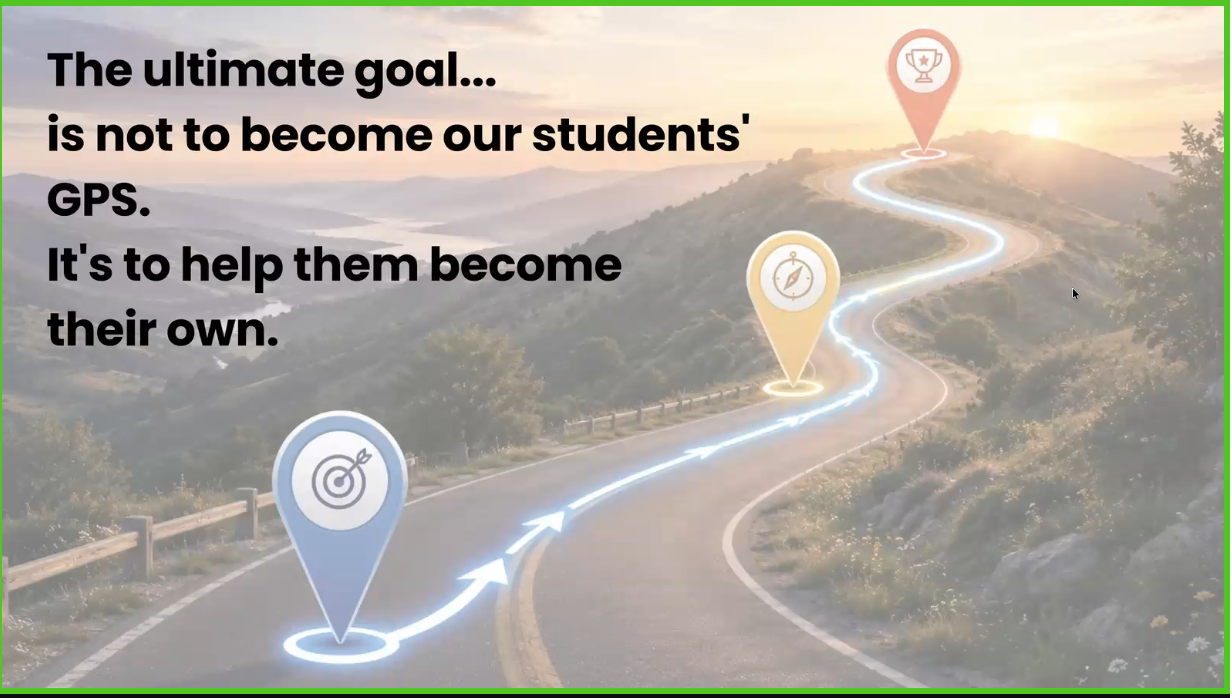
Maria proposes: using a Learning GPS:
G – Goal: Where am I going? So this is what we need our students to think about.
P – Progress: Am I on the right route? Am I ok? Or do I have to make some changes?
S – Success: How far have I got?
Maria says this framework should be accompanied with metacognition which is what we will look at now.
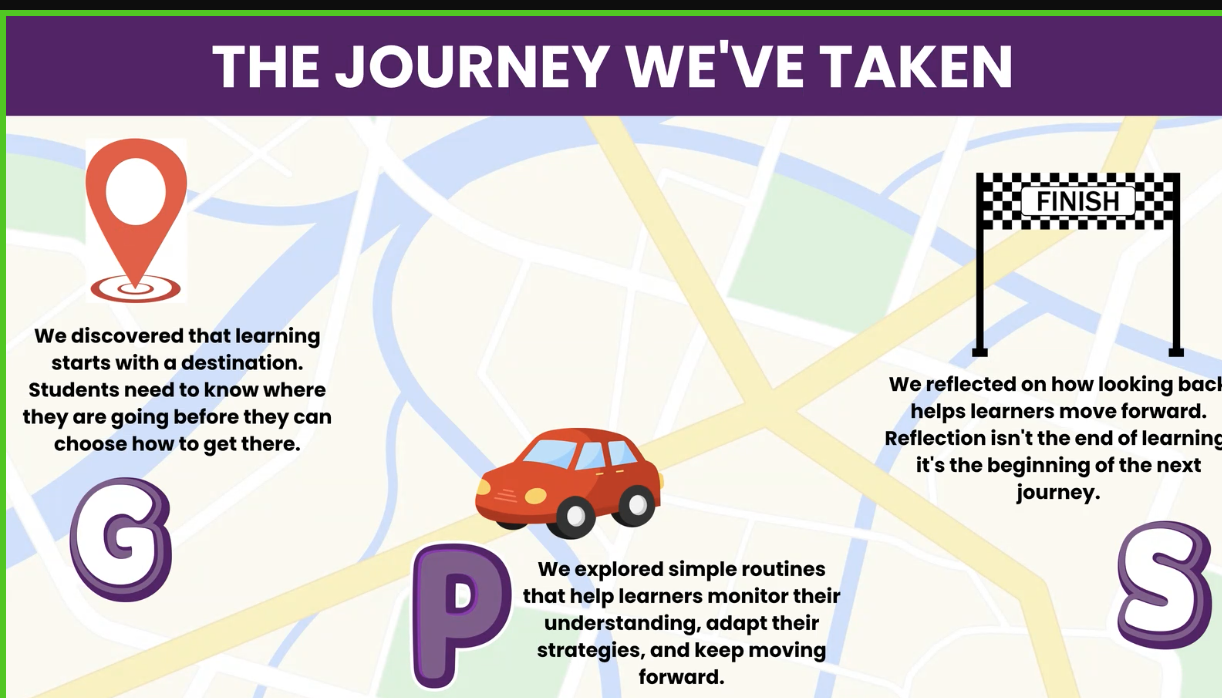
Metacognition = “thinking about thinking” (Flavell, 1979 p.906) It is the ability to think about and regulate one’s own learning. In the classroom it means helping learners become aware of how they learn, what strategies they use and how they can improve.
Why is it important? An essential element in today’s education but sometimes neglected by teachers as we don’t know how to implement it in lessons. It is an ongoing habit that transforms learning into understanding. Very important in age of genAI where there is a lot of content at hand. Metacognition CAN be taught, modelled and practiced and it SHOULD be.
G – Goal
Where am I going today as a learner? When students know the destination they can make better decisions, stay focused when they face challenges, and recognise success when they arrive. Every class needs a destination. We need to share that destination with students so they know where they are heading.
Question 1: How do you usually begin a lesson? (My answer: warmer, learning objectives; other answers: attention hooks, chat, emotional beginning, what do they already know about the topic…)
Question 2: Before your students start a task, do they know the activity…or the destination? (Varied answers!)
The activity and the destination are not the same thing. The activity is the what, the destination is the why/the goal.
Suggestions:
Here are some activities we can use to activate this idea of working with a goal.
My Learning Destination
Before starting, students complete:
- Today I am learning to… (to is important.. so it isn’t just Today I am learning the present perfect)
- This is useful because… they need to be able to connect what they are doing with how it will help them.
- I will know I’m successful when…
Before I start checklist
Students tick before a task:
- I understand the task
- I know what the final product should look like
- I know how much time I have
- I know what resources I can use
- I know what to do if i get stuck
This is practical for writing, projects, exam tasks or group work.
Success Criteria Builder
Instead of giving students success criteria, students build them. For example, before writing an email…
“What makes a good email?”
- clear greeting
- reason for writing
- polite tone
- closing phraase
- correct punctuation
Students can then use this list to guide them while working to help them stay on track.
Choose your route
Give students different ways to approach a task.
E.g. learning new vocabulary
Students choose one:
- make a mind map
- group words by topic
- write exmaple sentences
- draw pictres
- teach the words to a partner
Which route will you take today and why? (Activate metacognition)
Predict the roadblocks
Before the activity students complete:
- I think this task will be easy because…
- I think this task may be difficult because…
- If I get stuck, I will…
Strategy passport
Before the lesson, students choose one strategy to travel with
Today I will use
- underline key words
- ask for clarification
- use my notes
- reread instructions
- check a model
- use a dictionary
- rehearse bfore speaking
- plan before writing
This kind of activity will help them become more aware of the strategies they use
KWL For Language learning
Before a topic:
- K – What do I know?
- W – What do I want/need to know?
- L – What did I learn? (complete at end of class)
Plan my answer
Before speaking or writing, students complete:
- My main idea:
- Two words/phrases I want to use:
- One grammar point I want to practise:
- One thing I need to be carefrul with:
Traffic forecast
Before the task, students predict their confidence:
- I don’t know how to start yet (red)
- I may need some help (amber)
- I think I can do this (green)
What would help you move from red to yellow? yellow to green? Then they need to think about their strategies
3 minute planning pause
Before any main task:
- Minute 1: What do I have to do?
- Minute 2: What do I already know that can help me?
- Minute 3: What strategy will I use first?
So they need to think abotu the activity itself and what strategies they will use to complete it.
Goals: Students don’t need to know only what they’re doing. They need to know where they are going.
P – Progress
Question we need to ask: Am I on the right route? Why is this important? Learning doesn’t happen in a straight line. Effective learners constantly monitor their understanding, notice when something isn’t working and adjust their approach. If we help our students to do this, we will reduce the level/amount of frustration students have. It is ok to make mistakes and for things to go wrong but we need to be able to adjust or it is really frustrating.
It isn’t about asking “am I right?”. It is asking “is this strategy working?” “Do I need to make a change?”
Ideas:
Learning dashboard.
Instead of checking only answers, students monitor four aspects of their learning.
Self evaluation:
I am….
- understanding
- participating
- using strategies
- staying focused.
For each one, students choose where they are on a scale of smiley, neutral, sad. Then after they do this, ask “Which area needs your attention?”
GPS recalculating
Whenever students feel stuck, they cannot simply say:
“I don’t know”
Instead they complete:
- I am stuck because…
- The strategy I’ve tried is…
- Now I’m going to….
E.g. I’ve already reread the text, now I’m going to underline the key words.
Midway Pit Stop
Halfway through the activity, students answer 3 questions:
- What is going well?
- What is still difficult?
- What will I change during the second half?
One minute. Then continue working.
Then at the end ask: which area needs your attention?
Strategy tracker:
During the lesson they tick every strategy the actually used.
- reread
- asked a question
- used a model
- looked for examples
- worked with a parnter
- checked my mistakes
- slowed down
- explained my thinking
Which strategy helped you the most?
Strategy checkpoint
Did my strategy help me reach my destination?
- How did planning your ideas help you write a better text?
- Why is it important to link your ideas in and between paragraphs clearly?
Students have to think about the strategies implemented and check if the strategies they used help reach the destination
Confidence thermometer
Every 15 minutes students indicate:
- I’m getting lost
- Getting there
- Very confident
Then ask what would move you one level higher?
Learning selfie
Pause.
Students finish the sentences:
- Right now I feel… because… .
- What I need next is…..
The selfie is an invitation to post and reflect on this particular moment.
My next best step
Instead of what should the teacher do? Students ask “What should I do next?”
Possible answers:
- reread
- ask a classmate
- check my notes
- practice another example
- ask for feedback
- keep going
Error detective
While working, students identify one mistake. Instead of correcting immediately, they ask: Why did I make this mistake? What strategy could prevent it? This makes mistakes part of the learning process positively.
Checkpoint cards
Every 15 minutes, students answer one question:
- CHeckpoint 1: What have I understood?
- Checkpoint 2: What strategy am I using?
- What should I keep doing?
- What should I change?
To help them be aware of what stratgies they are using while completing activities.
Stop – think – adjust: a simple routine that can become automatic in your lessons.
- Stop: students think “What am I doing?”
- Think: “Is it working?
- Adjust: “What should I change?
Mid-journey questions – these help students do the same: pause, think and decide what to do next.
E.g. How does the way we read a text change when we use information from it in a new way? How can you practice this skill outside the classroom?
The three mirrors:
Students monitor learning through three lenses
- Content: do I understand?
- Strategy: is my strategy helping?
- Effort: Am i giving my best attention to this?
S – Success
Have I reached my destination? What have I learned about my leanring? Succes is not completing a task, it is understanding the journey that led to it. So the most important thing is the learning process of the student.
The rear-view mirror:
Project an image of a rear-view mirror. Students complete:
- Today I learned…
- I was surprised by…
- The most useful strategy I used was…
- Next time I’ll…
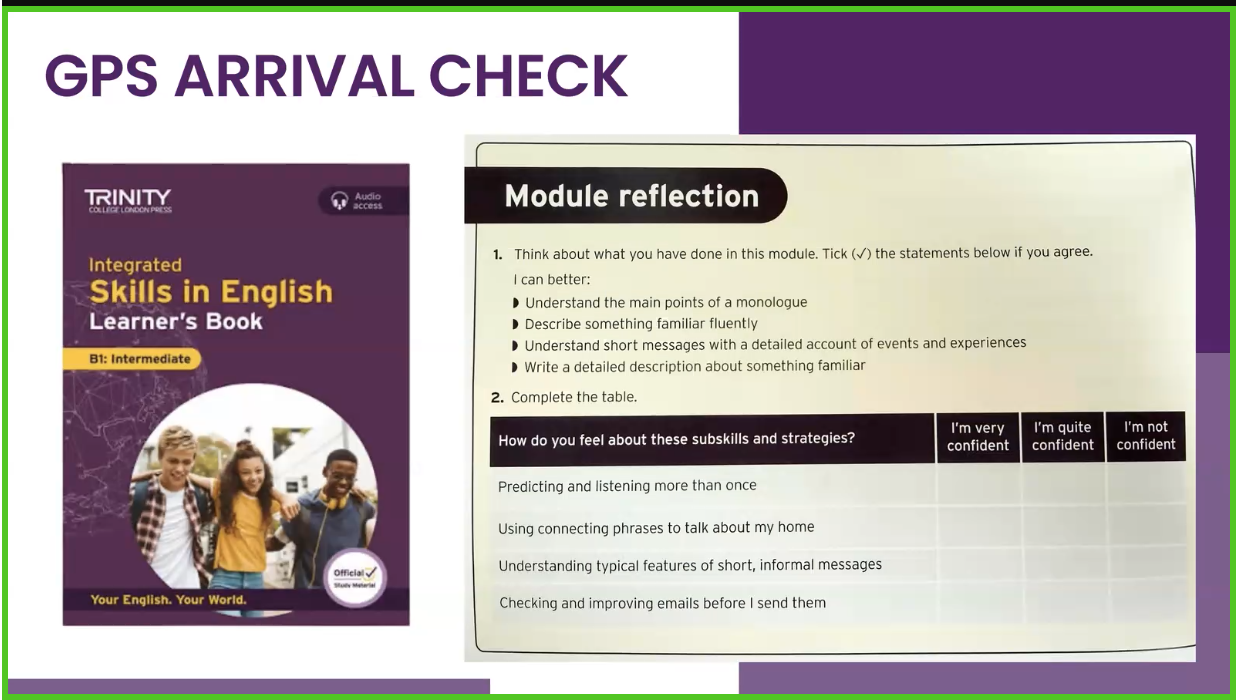
This table can be related to strategies or techniques implemented in lessons.
Before and after
- At the beginning of the lesson: I think…
- At the end: Now I think…
Learning highlight
Students choose one moment. Concentrate on that moment and complete the sentence: Today the moment I learned the most was…because… The most important part is the wyy. This is encourages them to identify high impact learning experiences.
Strategy awards
Give students categories:
- best strategy
- biggest improvement
- most helpful mistake
- best question
- most creative solution
This moves the focus away from marks, to focus on different areas to evaluate.
My future self:
Finish the lesson by writing:
Dear Future me,
Next time remember….
This creates transfer, which is the highest level of metacognition. Instead of only reflecting on the past, students prepare themselves for future learning.
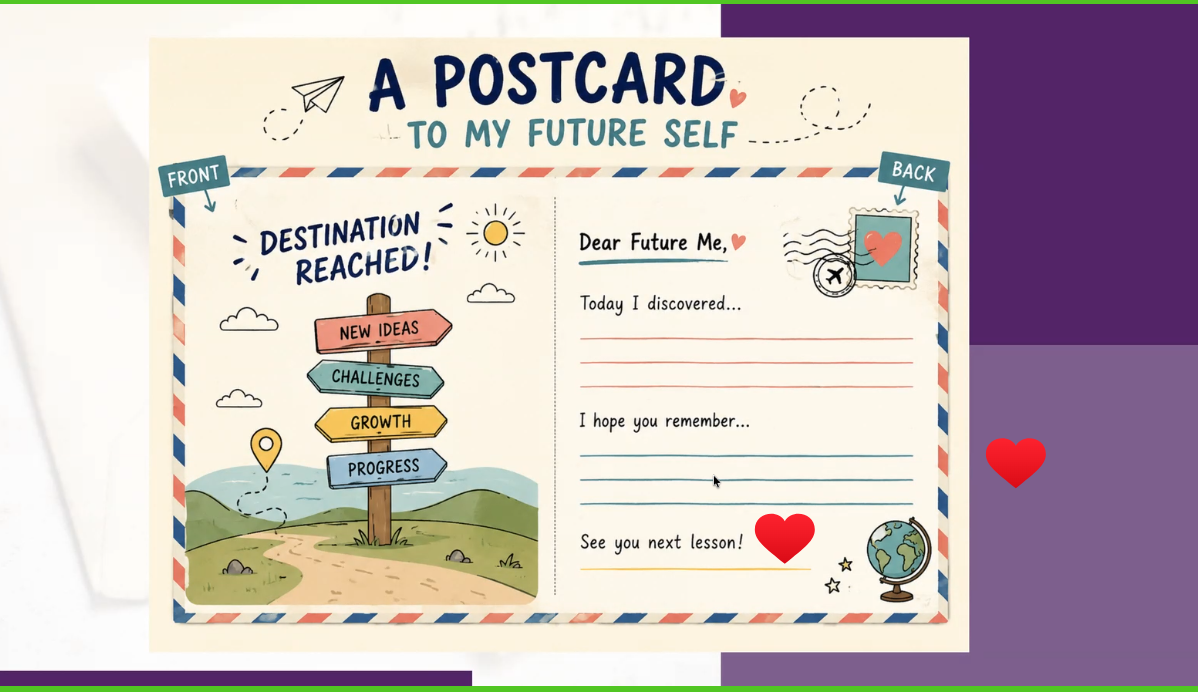
A postcard to my future self:
Today I discovered… I hope you remember… See you next lesson!
Exit Ticket 2.0
Instead of Today I learned…
Use:
- One thing I can do now that I couldn’t do before…
- One strategy I’ll use again is…
- One thing I still need to practise is…
The next destination:
Finish every lesson with:
- Today I arrived at…
- My next destination is…
Ask students to set their own goals. This reinforces that learning never ends. With these two sentences, you are adding metacognition.
Reflective hexagon
Students write six words:
- What I learned
- What helped
- What challenged me
- What surprised me
- What I’ll remember
- What’s next
My learning story:
Students complete:
- At first…
- Then…
- Finally…
- Now I know…
Metacognition promotes deeper learning, enhances self-regulation and motivation, fosters lifelong learning and supports 21st century skills.
My thoughts:
This was a great, if exhausting, session! Loads of great ideas that are really simple, I hope to try some of them out next academic year, in individual lessons and also in conjunction with the end of week reflection form I do with students. As ever, just need time to think about the hows and whens of it all!! 🙂

